
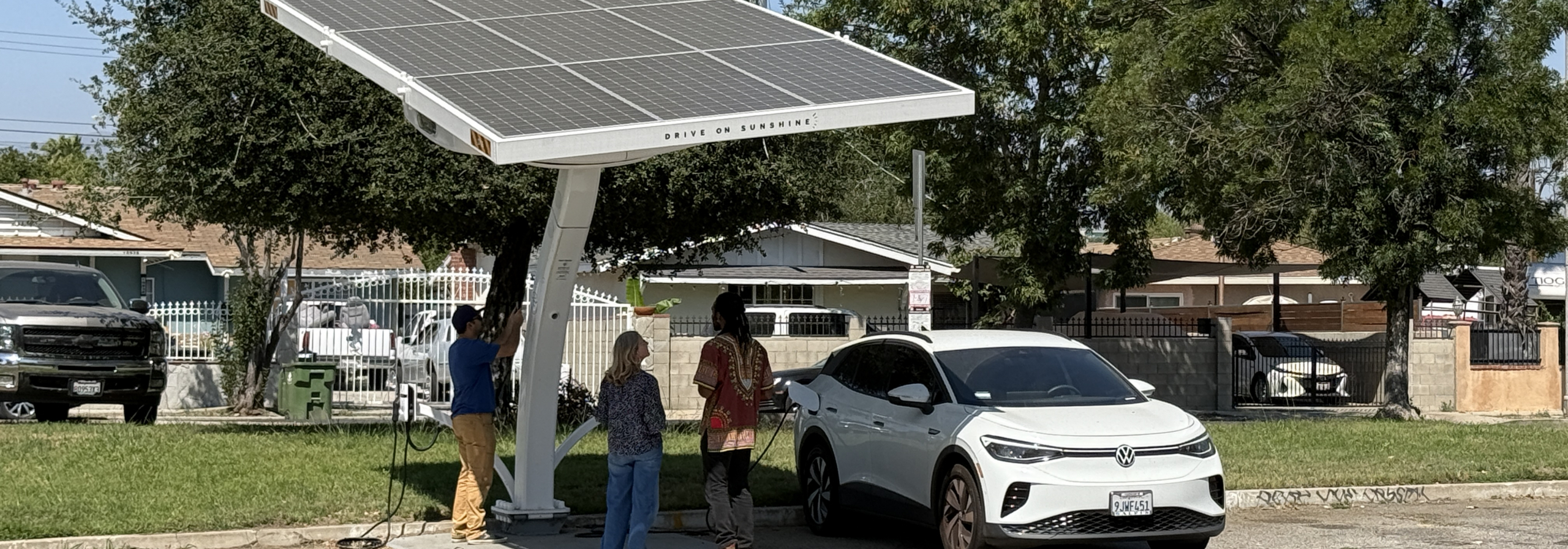
New electric vehicle charging infrastructure helps San Fernando Valley residents wean from gasoline
BACKGROUND
This case study highlights how TCC-funded electric vehicle (EV) charging infrastructure has filled charging gaps in the San Fernando Valley and helped residents save money. Two residents, Roberto Lopez and Jesus Herrera, have found the new charging stations at Ritchie Valens Recreation Center to be a convenient and cost-free option to power their EVs while enjoying a beloved recreational amenity. To learn more, see page 57 of this report.
ROBERTO LOPEZ is a resident of San Fernando, where he was born and raised. He is an Uber driver and uses his Toyota Prius, a plug-in hybrid EV, to get the job done. Lopez’s previous car, a Toyota Corolla, was powered by gasoline. When the car reached the end of its useful life, he looked into hybrid EVs, which are powered by both gasoline and electricity, as a way to save money from rising gas prices. The environmental benefits of a hybrid were also not lost on him in his shopping decision. With a $1,000 rebate through California’s Clean Rebate Project, Lopez decided to purchase a new Prius.
Compared to his previous car, Lopez is spending less on refueling his car to meet his transportation needs. The Prius is both more fuel efficient and has an additional 25mile range of full electric power. This range allows Lopez to make local trips without burning any fossil fuels. While there can sometimes be charging costs associated with those 25 miles, Lopez has found his EV to be much less expensive to operate.
“In the past, I spent $160 on gas with the Toyota Corolla per month, and the price [for the Prius] has been less than $80 a month. I spend the savings on groceries, which helps a lot.”
To charge his car, Lopez is a frequent user of the TCC-funded charging station located near Ritchie Valens Skate Plaza in Pacoima. There are two chargers at this station, with a typical power output of 5.76 kW when a single EV is charging or 1.92-2.88 kW for each vehicle when both plugs are occupied. Two additional plugs with the same power output are located near Richten Valens Pool, and two more at Paxton Park. All of the TCC-funded charging stations allow EV drivers to conveniently charge at no cost.
Lopez discovered the charging station at Ritchie Valens Park when he went on his regular visit to the skate plaza located within the larger park. He has been a frequent user of the skate park since he was a child, so the charging station is perfectly located for his lifestyle. He enjoys it because he can record skating videos and has found that other people in the park have been respectful of his equipment.
Before charging his Prius at Ritchie Valens Recreation Center, Lopez found it difficult to charge his car. He experimented with charging at home, but this increased his family’s electricity bill. Therefore, his family encouraged him to charge the vehicle somewhere else.
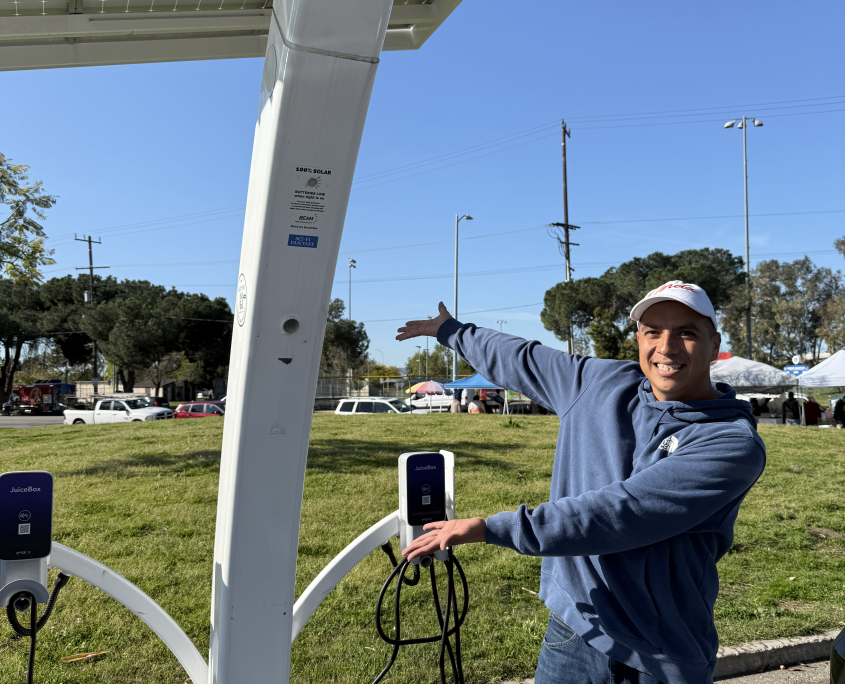

When I showed up back to the skateboard and I saw the charging station, I was like ‘wow’, like now, even double the reason to go, especially at that park, so I try to go there as often as I can.
Now Lopez charges his car four out of seven days of the week at Ritchie Valens Recreation Center, with his car fully charging in about two hours. He says he has no trouble f inding an open spot at the charging station after dropping off his children at school mid-morning. When he needs to find an alternative place to charge, Lopez uses the app ChargePoint to locate nearby, compatible charging stations.
While Lopez has figured out a convenient way to meet his personal charging needs, he is aware that charging accessibility is a major barrier for many other people to invest in an electric car.
JESUS HERRERA moved to the San Fernando Valley with his family when he was 10 years old. This pocket of Los Angeles is his home, and he has even decided to stay in the community even though his parents moved.
Herrera divides his time between working in real estate and community organizing. He has been an active participant in Pacoima Beautiful’s community engagement activities for the past two years. He enjoys learning from community members and advocating for a better quality of life in the San Fernando Valley.
When it came time to invest in a commuter car for work, Herrera decided to purchase a Tesla Model Y. He later purchased a Mustang Mach-E because he wanted a vehicle that was fun and exciting to drive since it has features, such as unbridle mode, which makes it sound like a louder, non-electric vehicle. Like Lopez, Herrera received a $1,000 rebate when he purchased his car. Herrera received his rebate through a pre-owned EV program administered by Southern California Edison’s emPower Gateway Program.
Along with Lopez, Herrera asserts that one of the major benefits of driving an EV is not spending on gas. He has infrastructure at home that allows him to charge overnight, but at a cost. His electricity bill has increased by $50 a month from charging, which is much less than he would be spending on gas.
Having a car that I can charge helps me save a lot more money… $50 gets me a full battery for the entire month, whereas I spend $110 to fill up a tank of gas.
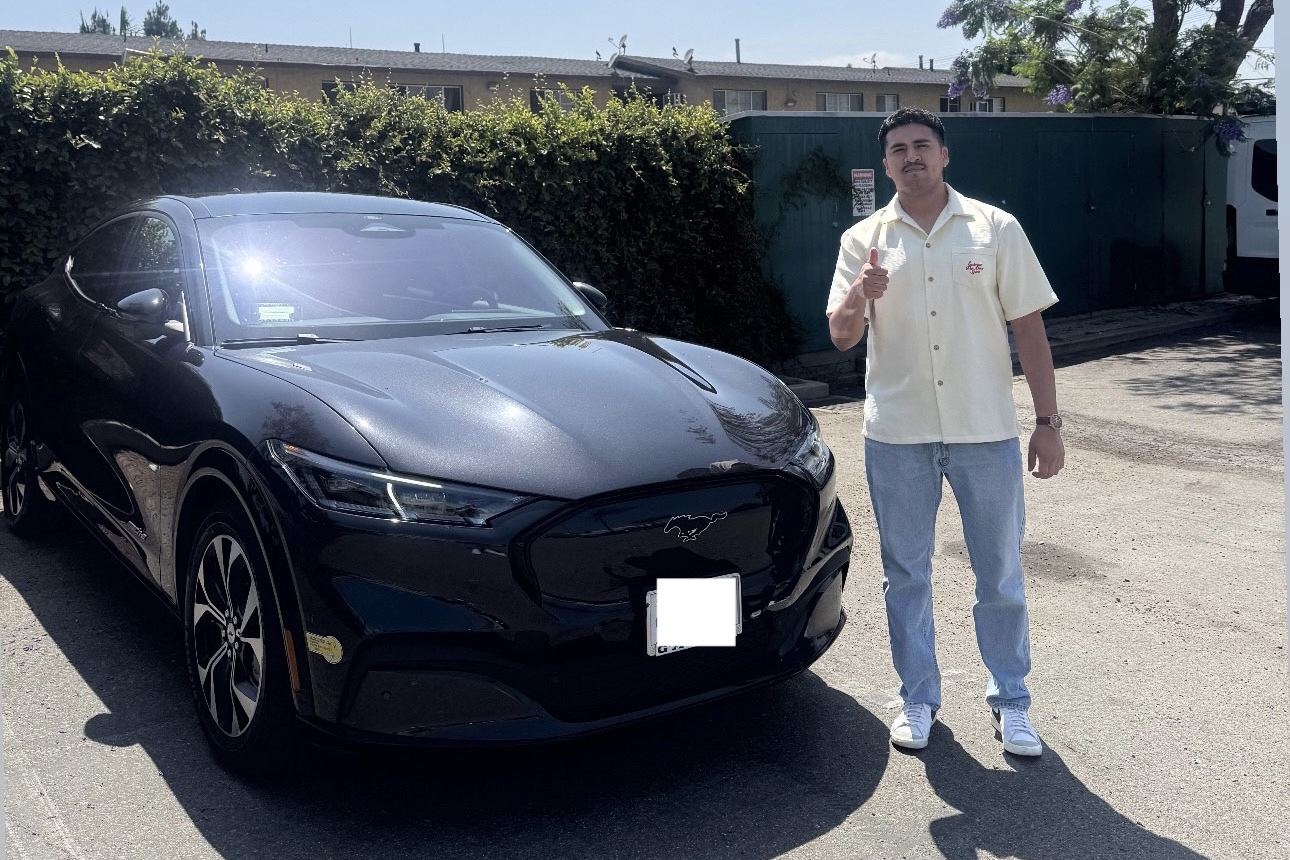
When Herrera does not charge at home, he finds that there are limited options to fully charge in a single session. His vehicles have electric ranges between 200 and 400 miles and require specialized, fast charging stations to obtain close to a full charge in about an hour.
“There’s actually only one Tesla supercharger near me … and that one’s always packed, just because that’s the only supercharger in the community.”
Often, Herrera opts to charge at the Ritchie Valens Recreation Center when he can because it is free, and he can charge his car while he plays pickleball and tennis with his friends.
“Sometimes my friends play pickleball or tennis at Ritchie Valens Recreation Center, so it’s easy [for me to charge there] … I play there for an hour or two, currently two or three times a week.”
In the next five to 10 years, Herrera hopes to purchase a self-sustaining eco-farm in his hometown in Mexico. He wants to grow fruits, vegetables, and produce, but also share some of the produce with friends and family. When it comes to saving money for that dream, every opportunity to cut costs helps, which is one of the reasons why Herrera is committed to refueling at an electrical outlet rather than at a gasoline pump.
Top page photo:
BEAM electric vehicle charging station at Paxton Park in Pacoima. Photo credit: UCLA Luskin Center for Innovation.