Jan 2026 • Fact Sheet • Frequently Asked Questions
Understanding Home Electrification and Neighborhood Gas Decommissioning in California
Educational materials on the purpose, benefits, costs, and process of residential building electrification and neighborhood gas decommissioning
Researcher(s): Sooji Yang, Lauren Dunlap, Greg Pierce, and Richard Parks
Funder(s): New Frontiers in Research Fund – International
Summary:
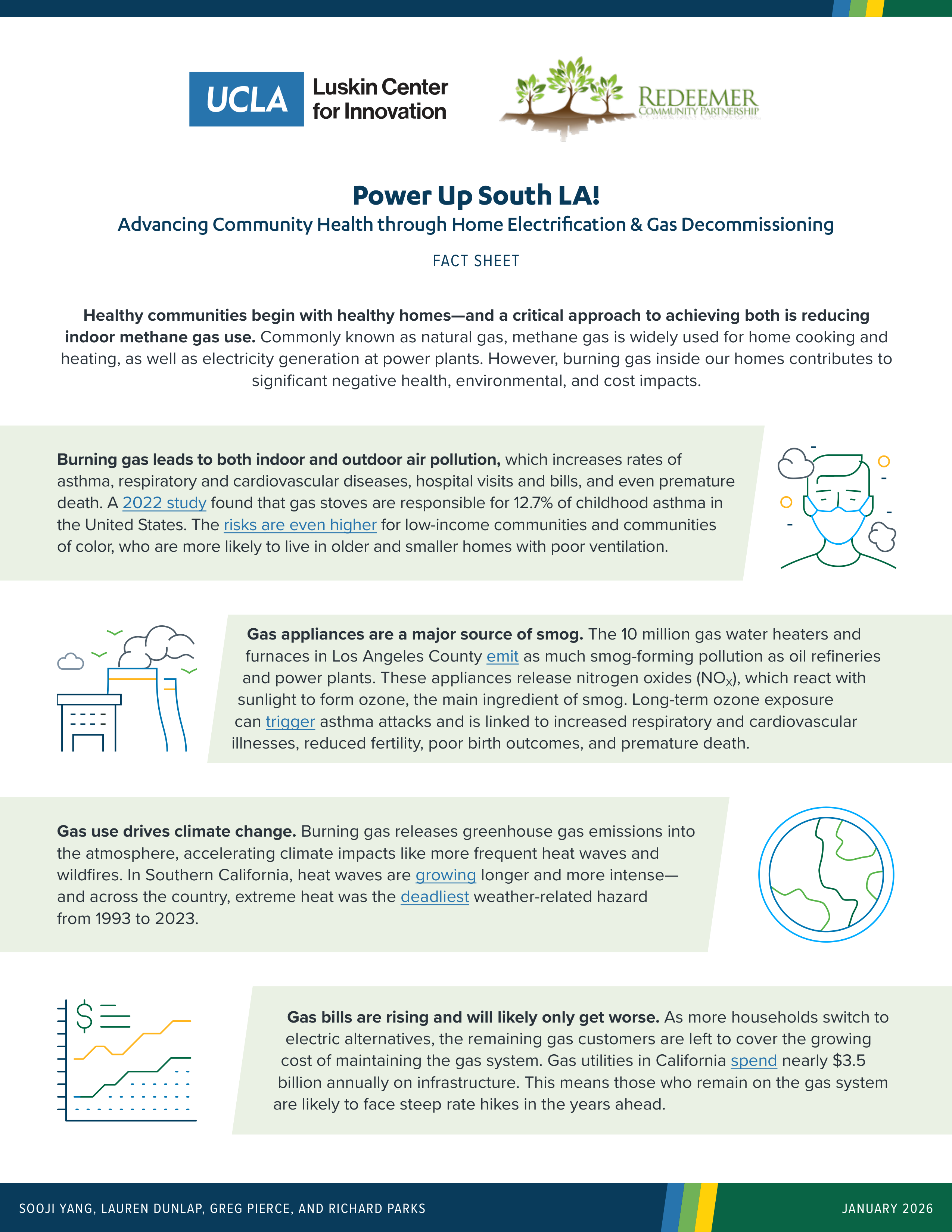
Switching from gas to electricity for home energy use reduces indoor air pollution, improves health, and can reduce carbon emissions to meet climate goals, depending on the electricity source. But going electric is often an expensive, complex, and confusing endeavor, and many households have difficulty navigating the process and paying for appliances and retrofits. These community engagement materials aim to help residents learn about the process, the purpose, and the trade-offs of home electrification, as well as resources available to help. The Overview Fact Sheet outlines the purpose, benefits, and process of decarbonizing homes, from electrifying to shutting down fossil fuel infrastructure. It provides basic information on the costs and benefits for households. The Cost and Benefits FAQ responds to common questions and concerns about transitioning from gas to electricity and concludes with resources for residents who wish to learn more.
These materials were developed as part of Power Up South L.A., a partnership between the UCLA Luskin Center for Innovation and Redeemer Community Partnership. This initiative aims to lay the groundwork for residential building electrification in and around the Exposition Park neighborhood of South Los Angeles. Power Up South L.A. is a part of the Justice First project—a community climate planning collaboration between academic researchers and underserved communities making or affected by energy transitions.