October 7, 2025
Building resilient utilities: UCLA issues report on key water and power infrastructure needs
Smart meters and undergrounding power lines are among promising innovations in addressing climate and fire risks

October 7, 2025
Smart meters and undergrounding power lines are among promising innovations in addressing climate and fire risks
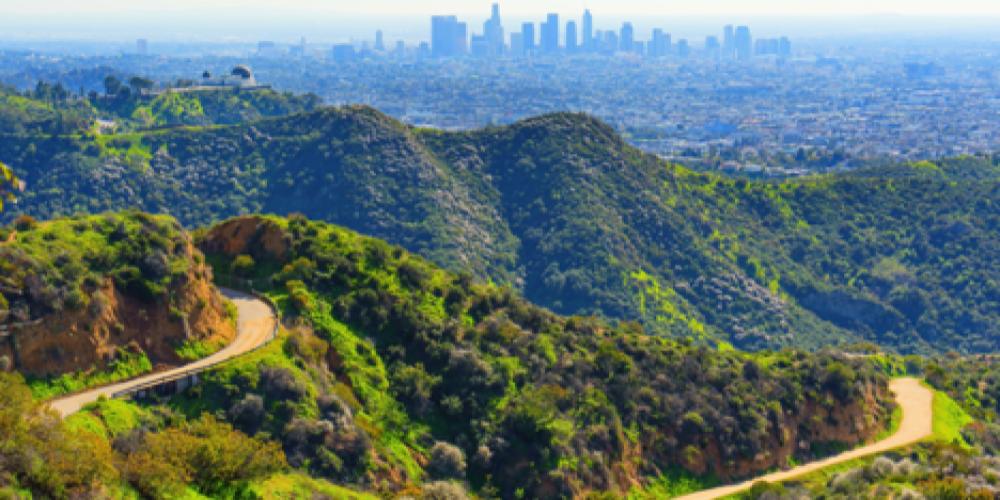
Photo by City of Los Angeles / Ekaterina Chizhevskaya
Key takeaways
By Jason Islas
More than 100 engineers, utility leaders, scientists, and public officials came together in the wake of January’s catastrophic Los Angeles firestorms to identify innovative strategies and emerging technologies that could build more resilient infrastructure, recognizing the broader challenges of growing climate and disaster risks.
The intensive June 9 workshop — commissioned by the Los Angeles Department of Water and Power and developed, organized, and hosted by UCLA Luskin Center for Innovation with programmatic and logistical support from the Sustainable LA Grand Challenge (SLAGC)—created a unique opportunity for decision-makers to talk frankly and collaboratively to advance broader industry knowledge and capacity.
The resulting report, “Innovation Opportunities for a Resilient L.A.,” emphasizes that no single strategy is sufficient. Instead, Los Angeles must pursue a mix of approaches, from upgrading infrastructure to improving coordination across agencies. Importantly, many of the ideas developed at the workshop are already informing LADWP requests for proposals and pilot projects.
“Our partnership with UCLA is helping drive innovation that will help all utilities adapt to the challenges of climate change and shape future resilience policies and strategies,” said LADWP CEO and Chief Engineer Janisse Quiñones. “Following the Palisades wildfire, the UCLA Luskin Center for Innovation also provided critical insights on the role urban water systems play in wildfire response. Together, we’re not only addressing immediate challenges but also building the capacity and resilience needed to protect our communities and create a more sustainable and resilient future for Los Angeles.”
The workshop and report synthesize ideas and pilot concepts in four areas:

As the climate changes, our region faces dynamic and unprecedented challenges that will continue to test the limits of the vital infrastructure that underpins our daily lives. This convening of diverse expertise and on-the-ground experience lays a solid foundation on which LADWP and utilities in fire-prone urban areas globally can begin to build responsive solutions in key issue areas.
Researchers from the UCLA Luskin Center for Innovation, the California Center for Sustainable Communities, the Center for Climate Science, the UCLA Institute of the Environment and Sustainability, the UCLA Samueli School of Engineering, the B. John Garrick Institute for the Risk Sciences and UCLA Joint Institute for Regional Earth System Science and Engineering participated.
Learn more about the Luskin Center for Innovation’s research on water and fire, and UCLA’s partnership with LADWP, stewarded by SLAGC.
Get our latest research in your inbox.
 The Luskin Center for Innovation welcomes Jelena Jezdimirovic as a postdoctoral researcher
Learn more about her research.
 The Luskin Center for Innovation welcomes new doctoral researchers
Learn more about their interests and work.
 UCLA Luskin Center for Innovation 2025 Impact Report
Informing effective and equitable environmental policy solutions.

 Keeping California children cool: strategies for safe schools and homes