November 5, 2025
Keeping California children cool: strategies for safe schools and homes
New UCLA report highlights actionable solutions for legislators to protect kids from heat

November 5, 2025
New UCLA report highlights actionable solutions for legislators to protect kids from heat
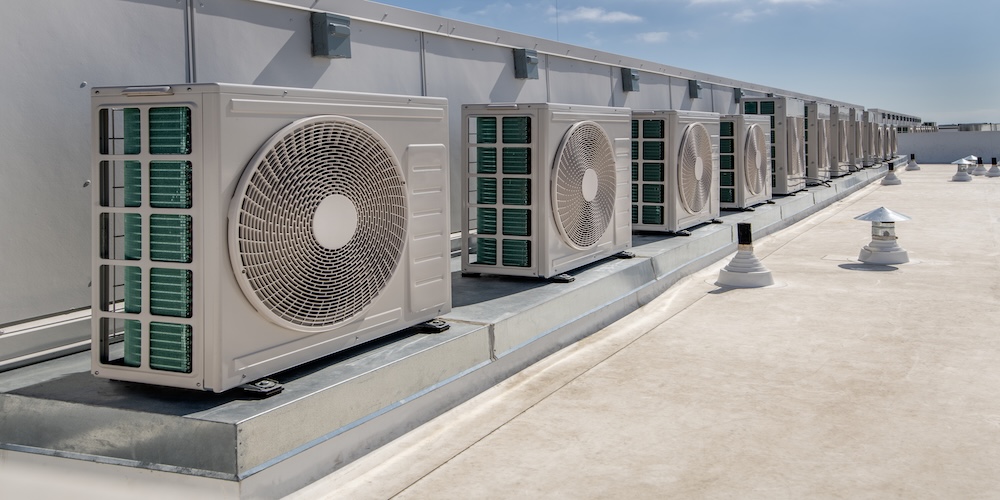
Air conditioning units on a roof. Credit: istock / alacatr
As heat waves become more frequent and intense, many California children face unsafe indoor temperatures where they spend most of their time— at home and at school. Access to cooling in homes and schools is now a public health necessity, not a luxury.
Building on years of research on heat resilience and school safety, the UCLA Luskin Center for Innovation has released a report offering policymakers a menu of strategies to expand access to cooling in homes and schools. The recommendations focus on the installation and maintenance of air conditioning and other mechanical cooling systems, offering practical, evidence-based options for state leaders seeking to protect children where they live and learn.

Children shouldn’t have to choose between their health and their education. Our research shows that California can take immediate, concrete steps to make schools and homes safer from heat.
The report outlines a set of policy and regulatory actions California leaders can adopt:
These strategies are informed by new data from the 2025 Luskin California Poll that reveal gaps in access to indoor cooling and public opinion on state action. These facts include that nearly half of parents say they’ve kept their kids home because of heat, and yet one in ten households with children lack working air conditioning (AC). Many more Californians avoid using their AC because of high energy bills.
“Expanding access to cooling is about more than comfort. It’s about health and equity,” said V. Kelly Turner, associate director of the UCLA Luskin Center for Innovation. “The solutions outlined in our report recognize that children in low-income households and communities of color are often the most exposed to heat and have the least resources to respond,” added Turner, who is also an associate professor of urban planning.
As California implements new investments in school modernization, clean energy, and community resilience, this research offers a timely guide for aligning those efforts. The report, Keeping Californians Safe with Cooling Systems in Homes and Schools, underscores that keeping classrooms cool and homes safe is essential to a healthy, equitable future for the state’s children.
Visit our website to learn more about our heat equity research.
Get our latest research in your inbox.
 UCLA Luskin Center for Innovation 2025 Impact Report
Informing effective and equitable environmental policy solutions.
 L.A.’s fiercest rivals — USC and UCLA — team up to cool the region ahead of 2028
ShadeLA aims to expand urban tree canopy and shade infrastructure, building heat resilience for Angelenos.
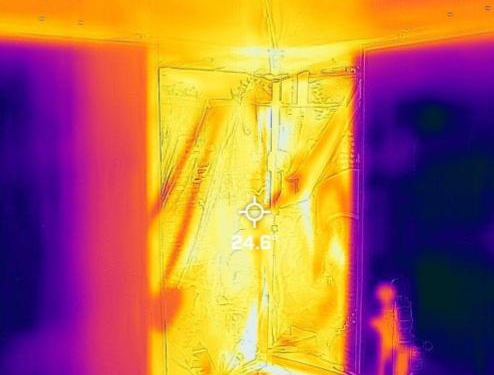 Beyond shade: UCLA researchers improve radiant cooling to make outdoor temperatures feel cooler
The approach uses low-cost, scalable, transparent and infrared-reflective surfaces and hydronic panels.

 California communities are impacted by thousands of oil and gas wells that feed...