
Removing barriers to clean energy careers
BACKGROUND
This case study explores how solar installation training, funded in part by TCC and administered by GRID Alternatives, has helped remove barriers for Fresno residents to enter the workforce. For Luther Mays and Matthew De La Rosa, the program provided tools and certifications needed to enter the solar industry — and a fulfilling way to get involved in their community. For more on Fresno’s Workforce Development Plan, see page 58.
The interviews for this story were conducted in December 2019 and September 2023.
LUTHER MAYS — a longtime California resident who spent most of his life in Sacramento — moved to Fresno in 2019 to help a family member. He immediately began looking for a new job but faced several obstacles, including having been out of the job market for a few years. Mays also doesn’t own a vehicle; he relies on the Fresno Area Express public transportation system and his bicycle to get around. He decided to start volunteering with GRID Alternatives a few weeks after relocating and found it an open, judgment-free working environment.
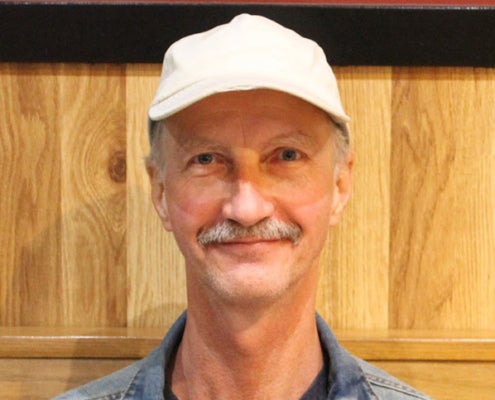
After volunteering on a few solar installations, Mays learned he could become more formally trained by joining GRID Alternatives’ Installation Basics Training-200 (IBT-200) program. The five-week course includes 40 hours of classroom learning and 96 hours of on-the-job training in rooftop solar photovoltaic system installation and maintenance. Now, he knows how to safely install and configure a solar array, and has developed specialized skills, such as how to anchor panels on different types of roofs. Through the course, he also became certified in CPR and basic workplace safety with the Occupational Safety and Health Standards 10-hour (OSHA 10) training. According to Mays, “Understanding all these safety things makes you more employable.”
Mays graduated from the IBT-200 program in September 2019 and is inspired to keep working toward a career in the solar field. The training set him up for success in multiple ways. In addition to certifications, GRID Alternatives has logged the nearly 200 hours of volunteer work, training, and installation experience — a record that Mays says will be helpful evidence of his experience for potential employers.

[One] thing that I really like about GRID Alternatives [is that] any jobs that you do for them, they keep a log of the hours … That’s really helpful as far as like a job reference.
The most rewarding part of my solar installation training is how excited and kind the families are as our crew is setting up their solar PV system.
But the most rewarding part of his training was how excited and kind the families were as the crews were setting up their solar PV system. He also enjoys being able to help relieve families of the financial burden of their electricity bills, which can have a big impact.
MATTHEW DE LA ROSA, originally from Hollister, moved to Fresno in 2022 to be with his family after a period of incarceration. Soon after arriving, De La Rosa attended a Parole and Community Team meeting (a gathering intended to connect recently incarcerated individuals with community resources) where GRID Alternatives was presenting about its solar installation job training program.
De La Rosa had been having difficulty finding work after his incarceration. While incarcerated, he got certified to operate a forklift — but though he applied for many jobs, potential employers rejected his applications upon learning of his background. So when he heard GRID’s presentation, he immediately signed up. Four days later, he started the installation basics training, joining several others with similar backgrounds.

There’s a lot of places in the solar industry that believe in second chances, and especially GRID. They focus on helping people that come from backgrounds like mine.
Through the training, De La Rosa learned critical skills for working in the solar industry, from the math and technical aspects of setting up a solar array to the safety certifications needed to perform the work. He emerged from the training with OSHA 10 and CPR certificates. The training also came with a $2,400 stipend, which came just in time to help De La Rosa out of a tight spot: He had been getting a ride to work, and the stipend helped him to purchase a vehicle just as the person giving him a ride became unavailable.
And beyond these skills and the financial benefit, De La Rosa also established new professional and personal relationships through the camaraderie of the training cohort. He stays in touch with several other trainees, all of whom work in the solar industry — he’s even going to be in a wedding with one.
The training has changed the course of De La Rosa’s career. Prior to the training, he was working at Applebee’s — and while he loves cooking and has spent years in the food industry, he was ready to use his newfound skills and exercise his brain in a new way. After completing the training, he worked with the electrical union for five months. When he saw a job posting for GRID Alternatives, he jumped at the chance to apply. Now, he has a position with GRID as a solar installer. “I worked for the Union on a big solar farm, but I wasn’t using the skills I obtained at GRID. I kept looking for jobs, and when I saw GRID’s post, I applied — I wanted to work there since I was in the program.”
While De La Rosa had never considered working in the solar industry prior to GRID’s presentation, he finds the job fulfilling. He likes it — apart from the heat of working on Fresno’s rooftops.
GRID’s efforts to serve low-income families resonate with De La Rosa, as well. “The whole reason I joined GRID is because I like what they’re going for, as far as helping people on a low income. I come from a family with low income and I know it’s helpful for a lot of families. It would have been helpful for my family.”
The benefits of this job are financial for sure. But also, I’m a hard worker. And I feel like right now, I’m using a lot more of my skills.
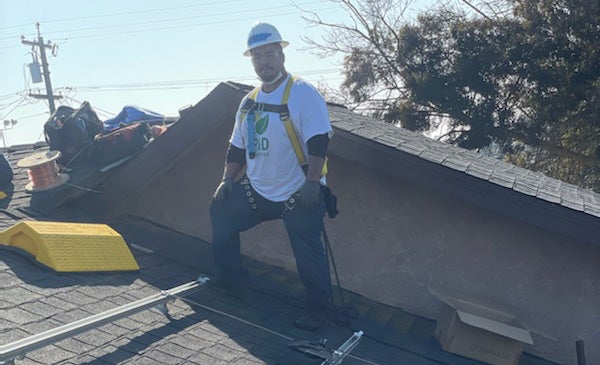
De La Rosa looks forward to advancing in the solar industry. GRID is covering the cost of a more advanced North American Board of Certified Energy Practitioners solar certification, which will support his efforts to move into a leadership role at GRID. “I have really good supervisors — they have a bunch of knowledge. I always try to ask questions, and eventually I would like to be a supervisor myself.”
Top page photo:
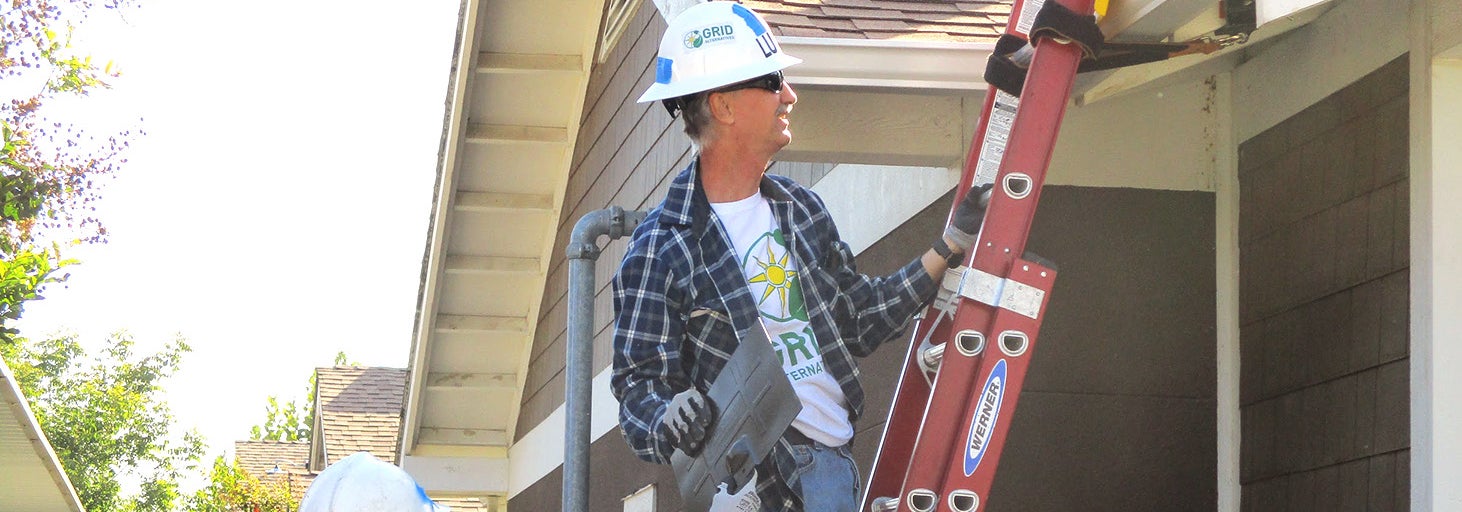
Luther Mays working at an installation project job site in Fresno. Photo credit: GRID Alternatives