
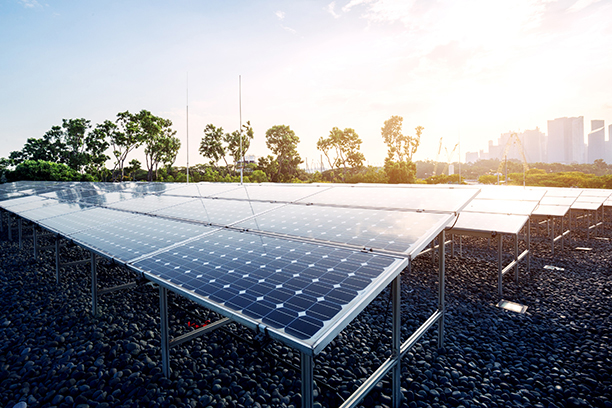
A growing number of cities are choosing to transition to 100 percent clean electricity – and dozens have already hit that target – while the list of states committed to a 100% renewable energy future also continues to grow.

This local and state demand has contributed to a near doubling of renewable energy generation in the decade since 2008, according to the U.S. Energy Information Administration. Much of the cost-effective renewable energy is coming from large, utility-scale wind, solar, and hydropower operations. Small-scale solar installations are also part of the solution and can provide local economic development, job creation, and clean air benefits.

Research by the Luskin Center for Innovation (LCI) has influenced the design and implementation of distributed energy policy and investments in leading cities and states, like California. We focus on helping to bring renewable energy to all types of communities, including low-income areas disproportionately impacted by pollution from fossil-fuel powered energy and transportation. (See our Transportation Program page for research on transportation electrification.) Our renewable energy-focused research includes the following projects.

CURRENT PROJECT(S)

Guiding Equity Strategies Implementation in LA's Energy Transition

Researcher(s): Gregory Pierce, Lauren Dunlap, Dan Coffee, Stephanie Pincetl, and Rachel Sheinberg
Funder: Los Angeles Department of Water and Power

This new engaged research builds on the Luskin Center for Innovation’s past clean energy affordability recommendations for the LA Department of Water and Power.

Learn more

PUBLISHED RESEARCH

Barriers, Needs, and Progress Toward an Equitable Energy Transition

Researcher(s): Lauren Dunlap, Rachel Sheinberg, Will Callan, Samantha Smithies, and Gregory Pierce
Funder: Los Angeles Department of Water and Power (LADWP)

LADWP is developing its clean energy transition strategy in response to the 2023 LA100 Equity Strategies study. Based on agency staff interviews, this report highlights the need for ambitious, concrete, and transparent public commitments and recommends more accessible public information sharing and community engagement, citywide collaboration, and a centralized data management system.

Read the report

Researcher(s): Rachel Sheinberg, Gregory Pierce, Stephanie Pincetl, Gregory Reed

This study synthesized lessons from the LA100 Equity Strategies initiative, a collaboration between UCLA, L.A. Department of Water and Power, National Renewable Energy Laboratory, and local community-based organizations, to support urban just energy transition efforts elsewhere.

Read the article

In this report, the researchers discuss potential water-related pitfalls, challenges, and open questions surrounding green hydrogen in California.

Researcher(s): Michael Rincon, Gregory Pierce, and Lauren Dunlap

Environmental justice advocates, academics, and other stakeholders have raised concerns about the equity, justice, and water use implications of expanding hydrogen’s role in the energy system. The authors discuss potential water-related pitfalls, challenges, and open questions surrounding green hydrogen in California.

Read the report

Researcher(s): Gregory Pierce, Kelly Trumbull, and Dan Coffee

To support Los Angeles’s transition to 100% renewable electricity by 2035, this chapter provides specific recommendations for robust, long-term, structural solutions to LADWP’s customers’ ability to pay their bills. The complete LA 100 Equity Strategies Study includes chapters written by other UCLA researchers, including those with expertise in engineering, environmental science, law, labor studies, public health, and public policy.

Read more | Read the report

Author(s): Kelly Trumbull and J.R. DeShazo

This report, supported by the Los Angeles Cleantech Incubator and the California Energy Commission, examines disparities in energy consumption and clean energy access across Southern California. The study highlights the importance of targeting investments in lower-income, disadvantaged, and heat-burdened communities, both to advance equity and to encourage emissions reductions. While overall clean energy access is unevenly spread among residents, the researchers find that electric vehicle charging stations are more equitably distributed — an outcome policymakers can learn from when ramping up rooftop solar and energy storage programs.

Read the report

Author(s): Kelly Trumbull, Colleen Callahan, Sarah Goldmuntz, and Michelle Einstein

This publication embodied the first-ever progress report on 100% clean energy policies in the U.S. Findings included that one in three Americans lives in a city or state that has committed to, or already achieved, 100% clean electricity.

Read the report

Author(s): J.R. DeShazo, Michael Kadish, and Alex Turek

This report by the Luskin Center for Innovation and GRID Alternatives assesses the barriers to solar adoption for low-income residents and provides a roadmap for how they could be overcome by unlocking millions of dollars in state incentives for residential solar on affordable housing.

Read the report

Author(s): J.R. DeShazo, Alex Turek, and Michael Samulon

This report identifies and clarifies important junctures in decision-making when utilities design a community solar program. This includes the importance of garnering support from potential participants, non-participating ratepayers, and the community at large.

Read the report

Harnessing LA’s FIT to Create Jobs and Build Social Equity

Author(s): J.R. DeShazo and Alex Turek
Funder: Los Angeles Business Council

Los Angeles launched the nation’s largest Feed-in Tariff (FiT) In Basin Solar program in 2013, helping to catalyze an emerging market for multifamily housing, commercial, warehouse, and industrial rooftop solar. Part of the promise of a properly designed and well-implemented FiT is that it will drive economic growth, enhance environmental sustainability, and create social equity in the workforce by creating career-ladder jobs through rooftop solar installations.

This report assesses the FiT program’s early impacts on the local solar market and on local employment. Researchers find that 40 percent of proposed solar projects are in solar equity “hot spots,” meaning in neighborhoods with high solar rooftop potential and indicators of high socioeconomic and environmental distress.

This is the third report in a three-part series commissioned by the Los Angeles Business Council and involving LCI research. The first, Making a Market: Multifamily Rooftop Solar and Social Equity, looks at areas of opportunity within the multifamily market. A follow-up report, Empowering LA’s Solar Workforce: New Policies that Deliver Investments and Jobs, focuses on the commercial and industrial markets as well as the solar workforce.

See LCI’s Energy Program page for other examples of how LCI scholars are expanding knowledge and capacity to advance equitable energy policies and programs.

Read the report

An Evaluation of Early Progress

Author(s): J.R. DeShazo and Alex Turek

Read the report

An Atlas of Investment Potential in Los Angeles County Version 2.0

Author(s): Colleen Callahan, J.R. DeShazo, Henry McCann, and Norman Wong

In response to then President Obama’s Climate Data Initiative, the Luskin Center for Innovation and the Environmental Defense Fund released the Los Angeles Solar and Efficiency Report (LASER) — a data-driven mapping tool designed to help communities identify opportunities to invest in projects that will save households money, create clean energy jobs, and strengthen climate resilience. The tool illustrates existing pollution and climate change impacts at a community level and illustrates “hot spots” ripe for rooftop solar investment and energy efficiency building potential at the parcel level.

Read the report

Comparative Analyses and Lessons Learned

Author(s): J.R. DeShazo and Ryan Matulka

Read the report

An Assessment of the Costs and Benefits of Energy Security Investments for the San Pedro Bay Ports

Author(s): Ryan Matulka, J.R. DeShazo and Colleen Callahan
Funder: The Aquamarine Institute, with support from Ports of Los Angeles and Long Beach

The researchers created a framework to study electricity consumption and evaluate energy management strategies at the Ports of Los Angeles and Long Beach. The report served as a foundation for future energy management planning by the ports, including energy efficiency and local energy generation.

Read the report

Investing in Jobs, Energy Efficiency, and Renewable Resources

Author(s): J.R. DeShazo, Colleen Callahan, and Elizabeth Beryt
Funder: Los Angeles Business Council

The researchers analyzed strategies for the implementation of California Clean Energy Jobs Act (Proposition 39) funds to help maximize long-term investment in energy efficiency and clean energy, and the associated jobs and other benefits for Californians. The authors found that the funds could quadruple through the use of revolving investment mechanisms. The research helped inform investment mechanisms for Proposition 39 and other related campaigns.

Read the report

Author(s): J.R. DeShazo, Ryan Matulka, and Norman Wong

This atlas has helped cities, electricity utilities, and potential solar investors understand their solar rooftop potential so that they may be better stewards of the resource. Each map presents the geographical distribution of solar potential across neighborhoods and parcels.

Read the atlas

New Policies that Deliver Investments and Jobs

Author(s): J.R. DeShazo, Manuel Pastor, and Mirabai Auer

Read the report

Multifamily Rooftop Solar and Social Equity in Los Angeles

Author(s): J.R. DeShazo, Manuel Pastor, Mirabai Auer, Vanessa Carter, and Nicholas Vartanian

Read the report

An Assessment of the Feasibility and Impacts on an In-Basin Solar Feed-in-Tariff Program

Author(s): J.R. DeShazo and Ryan Matulka

Read the report

Author(s): J.R. DeShazo and Ryan Matulka

Read the report