
Community-supported agriculture goes beyond food to build a healthy community
BACKGROUND
This case study explores how TCC funds have strengthened community ties in South Stockton through a CommunitySupported Agriculture (CSA) food access program. Stories from farmer Patricia Miller and residents Lehua Macias and Lori Shahan weave together to show how TCC uplifts community leaders and projects they know will make their communities stronger. For more about Stockton Rising’s food access project, click here.
Interviews for this case study were conducted in July 2022.
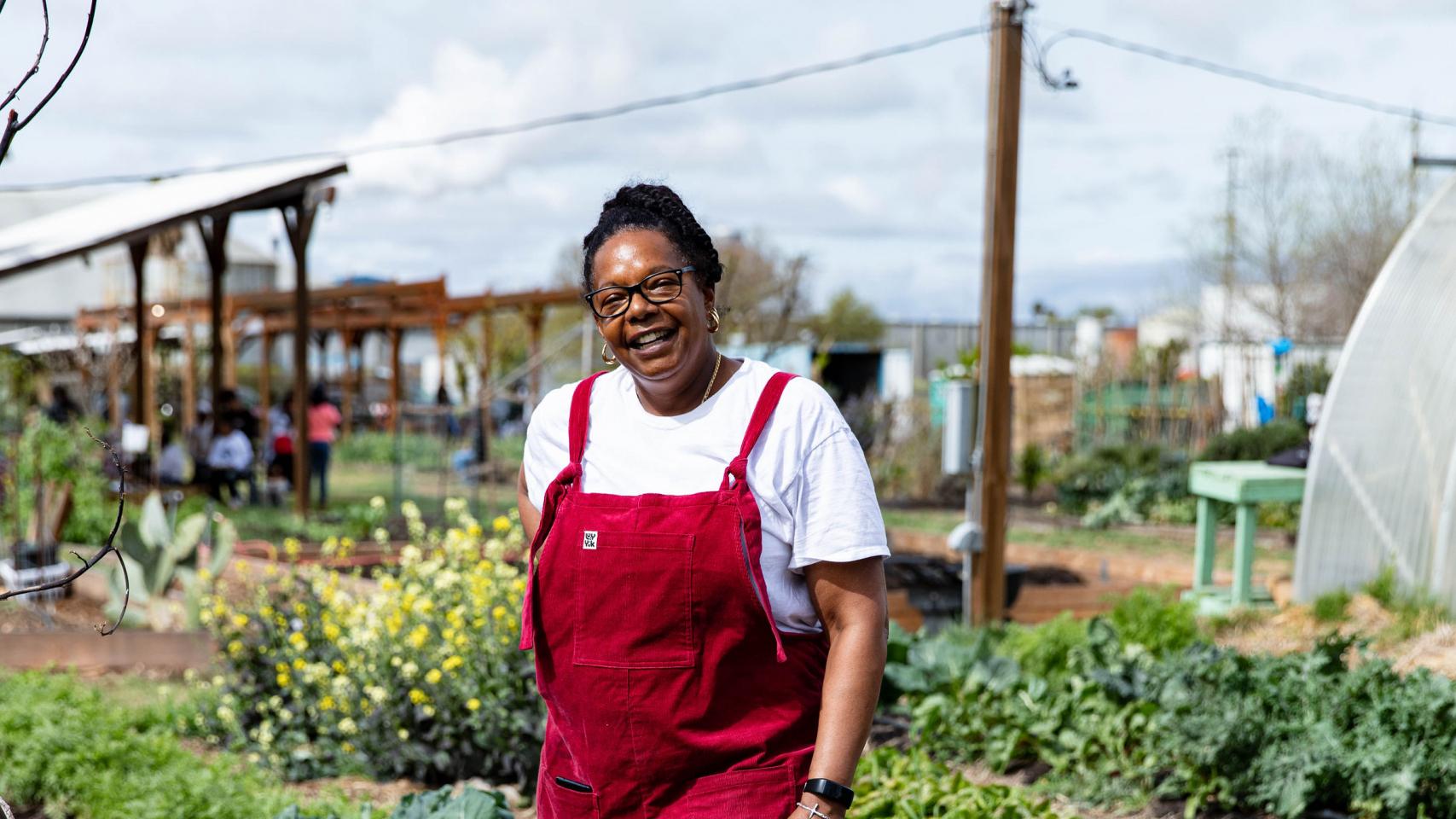
PATRICIA MILLER learned about the power of food from her grandmother, and it became a theme in her career. As an officer with the Stockton Police Department, she saw how a lack of healthy food access created health disparities for Stockton’s low-income residents and communities of color. For decades, Miller has worked to heal these disparities by sharing homegrown produce with her community, starting with collard greens from her own backyard.
In 2019, Miller helped launch the Edible Schoolyard (ESY) in Stockton. Miller originally intended to create an in-school education and healthy lunch program, but when the COVID-19 pandemic closed schools, she and ESY pivoted to serve the broader community. In partnership with other farms and organizations, they distributed over 15,000 boxes of produce to Stockton families in 2020 alone.
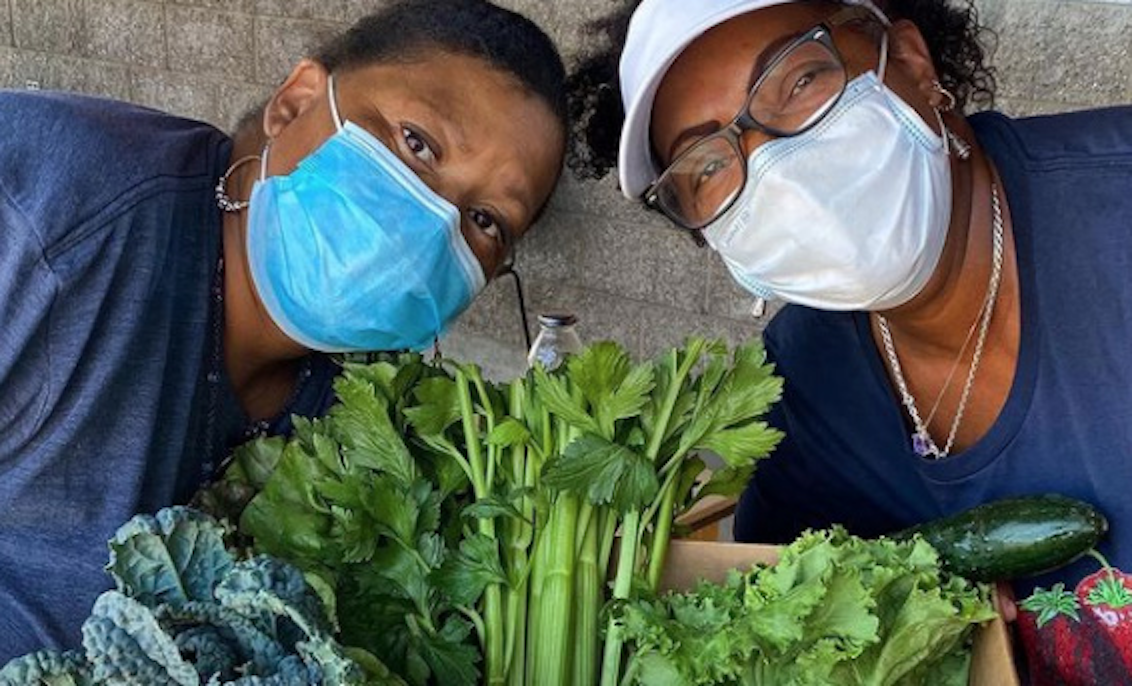

TCC builds our community up and gets people involved. This project develops trust in the community by removing disparities and expanding our understanding of food justice.
When TCC dollars came to Stockton, the funding influx enabled the farm to grow, feeding more families and fostering community growth. Now, the program is more than a source of healthy food — it is a network through which Stockton residents can learn about sustainable farming and connect with their communities. With support from partner organizations like Catholic Charities and GRID Alternatives, Miller and the ESY team bring together volunteers and residents at festive community events at the farm.
Miller has been a leader in her community for decades. Working with TCC, she has broadened her experience with food justice programs, built meaningful relationships, and developed ever more ambitious goals. Her next step, at age 63, is to go back to school to deepen her prodigious food justice expertise. “My goal is to support other Black producers to become entrepreneurs, build generational wealth, and make sure our children’s children understand business. So, I’m going back to school. How about that?”
LEHUA MACIAS embodies the spirit of public service — she simply enjoys helping people. So when this Stockton resident found out that the CSA program had extra food, she started delivering produce to families who needed the free produce but could not get to the garden themselves. Now, in addition to picking up her own food, Macias delivers boxes to six other families, from elderly couples to low-income families with children.

I think it’s great that the farm is out here in South Stockton. The neighborhood is very disconnected, and a lot of people there don’t really have the means or the money to buy produce in the stores.
Having grown up in Stockton from a young age, Macias remembers when she could drive for miles around and see nothing but farmland. Now, Stockton is more developed. The low-income Boggs Tract neighborhood — home to both the community farm and the city utilities office where Macias works — is cut off from Downtown Stockton by freeways. The families Macias delivers to would struggle to get to the farm themselves — most do not have car access, and there is no bus route that goes to the farm.
As a longtime friend of Miller, Macias hopes to expand her involvement in the CSA program even further. “When I’m done working full time, I’d love to get more involved in Patricia’s program. I told her, ‘Hey, maybe you can hire me part-time,’ and she said, ‘Well, hurry up and retire then!’”
LORI SHAHAN is another longtime Stockton resident who has enjoyed eating healthier and trying new veggies that she gets from the community farm. Although she and her husband can afford the food they need, the produce at nearby grocery stores is less fresh and less flavorful. For their family, it often doesn’t seem worth the price — particularly after inflation has led to steep price increases.
“When you get vegetables from the Edible Schoolyard project, you know they were just grown that week,” Shahan said. “They haven’t been sitting in storage. And you can tell by the flavor — they just taste so much better.”

It’s so much easier to eat healthy when I get such fresh vegetables. It’s fun to add things we haven’t had before to our diet. We’re eating more vegetables, and I think we eat less meat and junk food now.
Shahan has always liked to eat healthy foods, but getting free veggies has inspired her to cook more and try new recipes. The CSA boxes bring new options to Shahan’s kitchen that she wouldn’t necessarily buy at the store.
Early in the pandemic, the boxes were particularly helpful for the Shahans. Both are over 60, and both have health issues that made them extra cautious about grocery shopping. The CSA boxes allowed them to enjoy healthy food without risking their health by going into stores.
Top page photo:
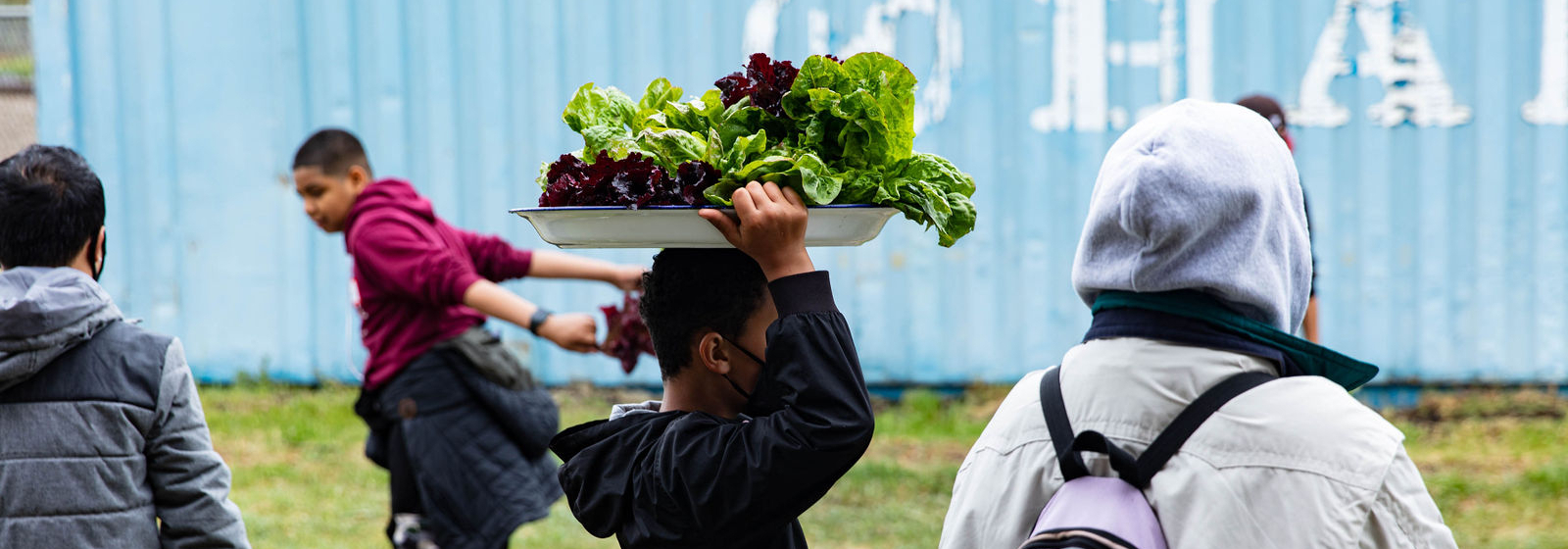
Students participating in an educational event in March 2022 at the Edible Schoolyard Community Farm in Stockton
Credit: Erin Scott