
Leadership program builds a multigenerational network of climate action ambassadors
BACKGROUND
This case study illustrates how the TCC-funded Community Liaison program — branded locally as the Climate Leaders program — has built local leadership capacity. From high school student Eufrosina Pacheco to seasoned activist Patricia Barrett, the program trains and employs Stocktonians to spread awareness about local solutions to climate change and refine their communication skills. To learn more about the program and Stockton’s broader Community Engagement Plan, click here.
Interviews for this story were conducted in January 2023.
EUFROSINA PACHECO is a senior at Edison High School in South Stockton. As a nearly lifelong Stockton resident whose family moved to the city when she was 1-year-old, Pacheco loves the diversity of the city.
Pacheco’s father chose Stockton for the wealth of agricultural jobs he saw there, and now he inspires her environmental and climate activism and leadership. It started with a podcast that Pacheco created with friends from Little Manila Rising, a community-based advocacy organization in South Stockton. The podcast explored how climate change and heatwaves affect farmworkers. When Pacheco started the project, her father was working in a cherry field, and she interviewed his coworkers about how a recent heatwave affected them. “It was really surprising that a lot of them didn’t know the impact heat had on their health,” she said.
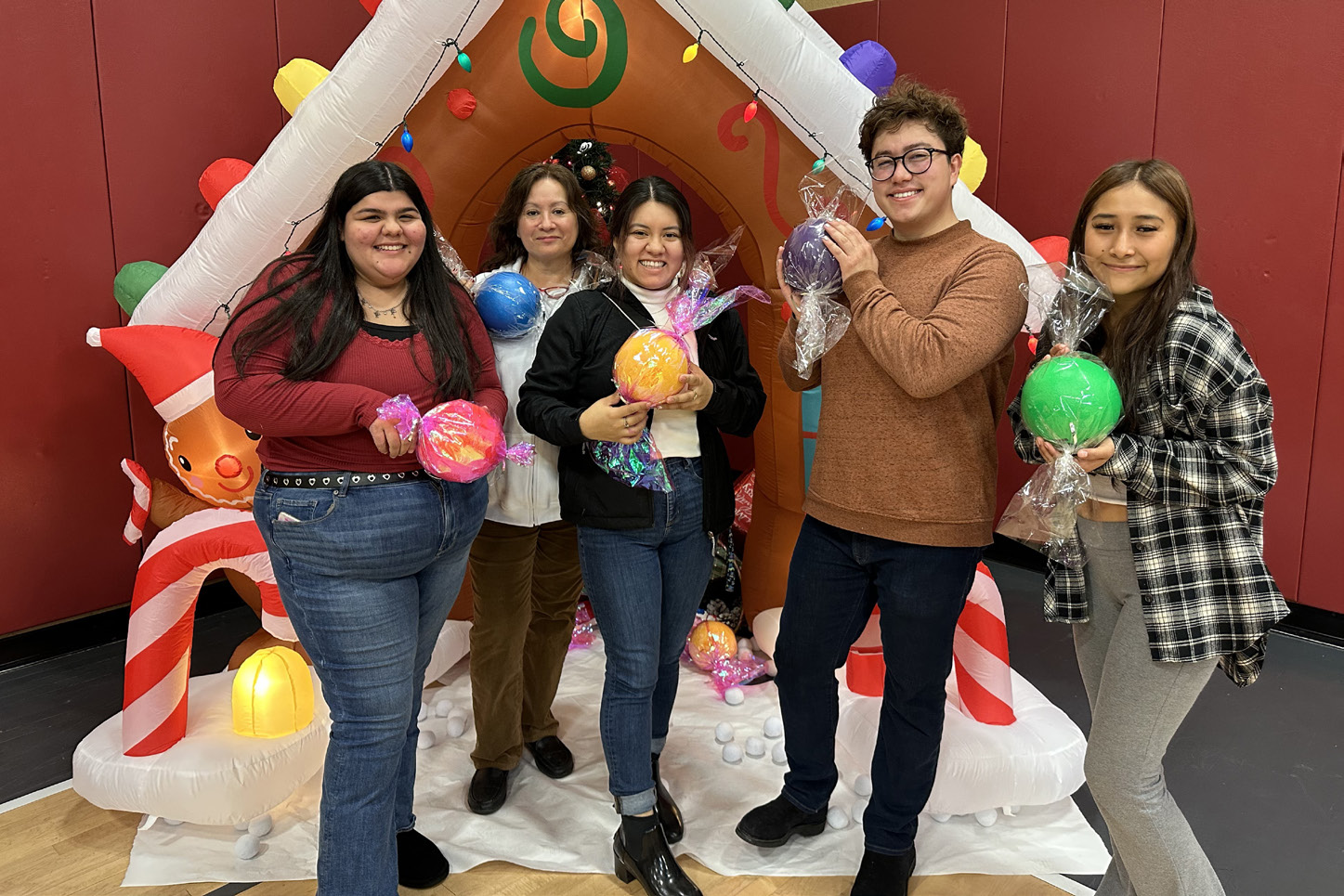
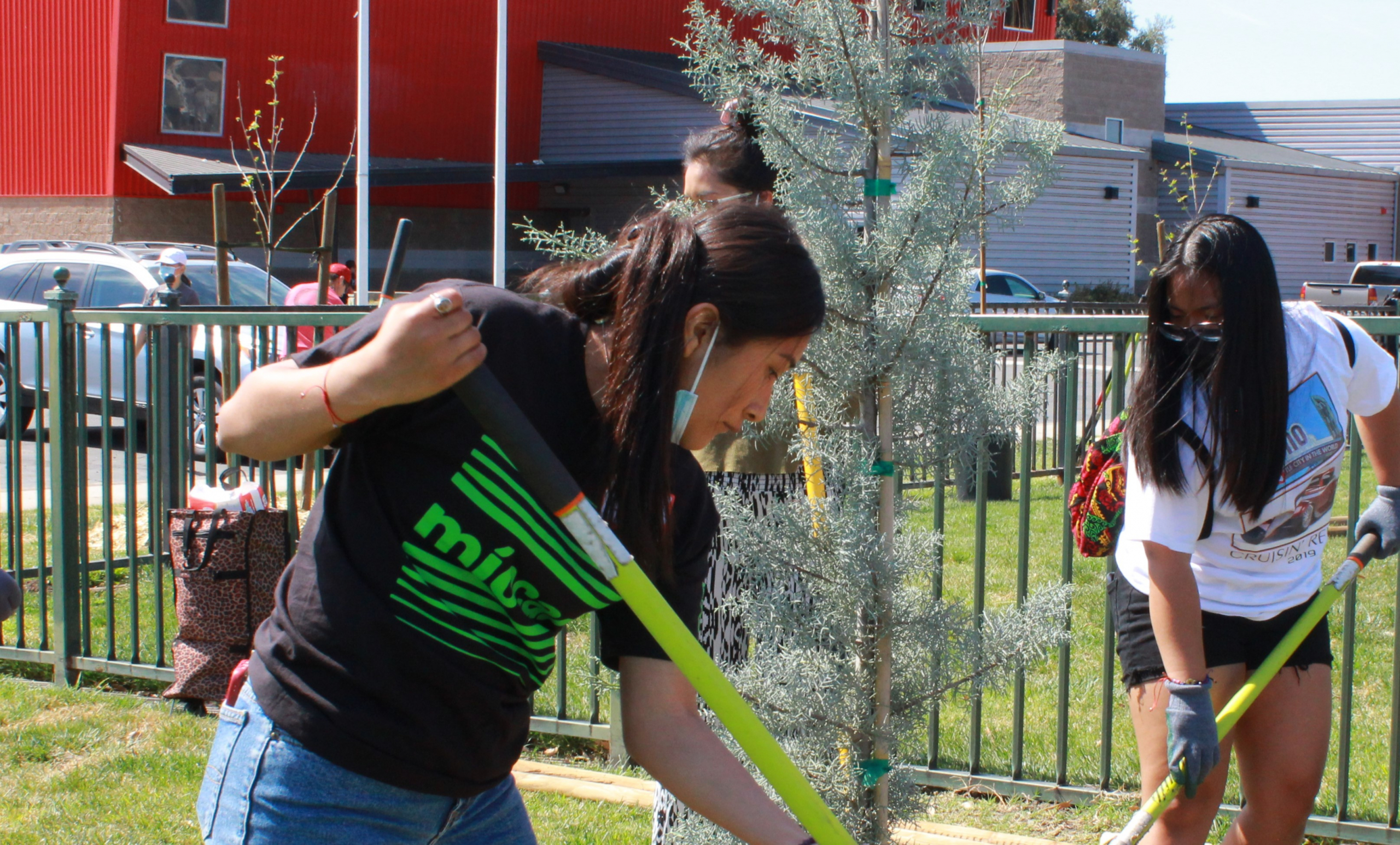
Pacheco credits her podcast with helping her get an internship with Public Health Advocates, the partner organization that leads the Stockton Rising Community Engagement Plan. The internship inspired her to apply to be a Climate Leader — a local ambassador for Stockton Rising programs. The TCC-funded Climate Leaders program provides training on climate change topics and leadership skills, such as public speaking and civic engagement.
With newfound public speaking skills and a wealth of knowledge about climate change impacts and local solutions, Pacheco is becoming a more confident communicator, problem solver, and leader in her community. The Climate Leaders program has also expanded Pacheco’s network of peers and mentors, helping her learn from others working in climate advocacy.

I’ve not only made friends, but gained mentors — people I trust, and who I can look up to when I don’t really know what my own point of view is. Those are the best relationships.
Before this, I had no clue what career I wanted. Nothing clicked for me. But after these trainings, and seeing all these amazing people fight for change, I feel like I could manage a program or even run for city council.
In addition to skills and knowledge, Pacheco has gained some financial independence through the monthly stipend provided to Climate Leaders. With the modest income it provides, she is saving to study political science at a four-year college so she can keep creating change in Stockton. The program has inspired her and given her the confidence to work toward a career in public service.
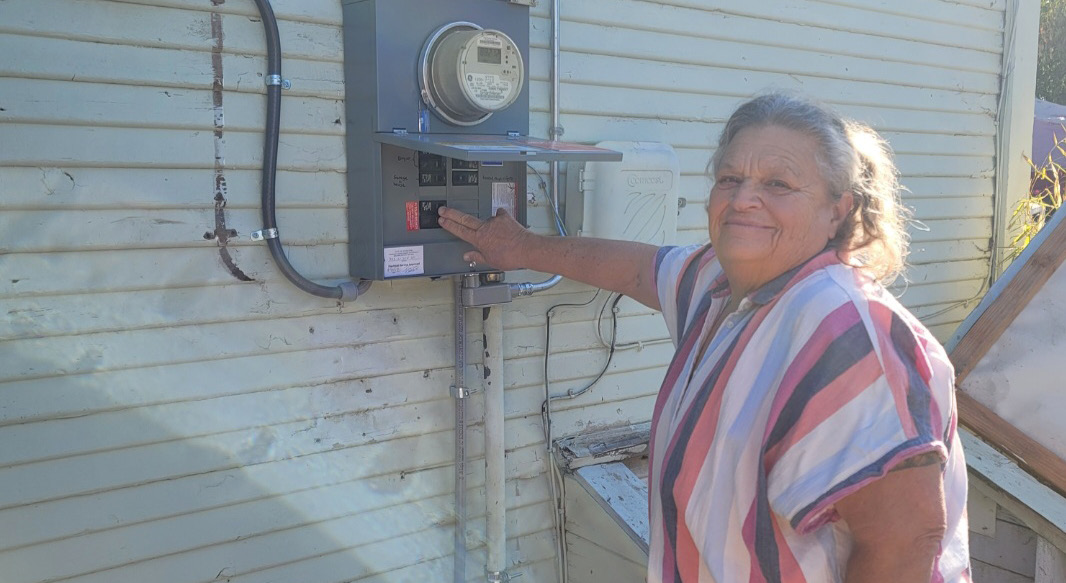
PATRICIA BARRETT has been an activist for 68 years. After well over a decade in Stockton, she has built a strong network and serves many roles in her community — from a substance abuse counselor to a volunteer fighting for mental health and homelessness services. Barrett works hard to live sustainably — including getting solar panels on her home through GRID Alternatives (see here) at no-cost — and to spread awareness of how others can do the same.
Barrett’s motivation for joining the Climate Leaders was layered. She has experienced environmental inequality f irsthand: Living near major highways and thoroughfares, she developed asthma and chronic obstructive pulmonary disease (COPD) from pollution. “I live in an area with dirty air and a 10-year-shorter life expectancy than the people in North Stockton.”
Young activists have also inspired Barrett to get involved in climate work. She regularly testifies at City Council meetings, focusing on mental health and homelessness. At one meeting, she saw a group of youth advocates from the Little Manila Rising environmental justice leadership development program (see here) present to the council. When she learned of the Climate Leaders program through an email newsletter, the memory of these young leaders was part of what motivated Barrett to apply.
As a Climate Leader, Barrett has deepened her understanding of the history of environmental injustice and the scope of the environmental movement. She has strengthened her public speaking skills, becoming more confident with speaking effectively without preparing remarks in advance. And like Pacheco, Barrett has developed her network, building new relationships with Stockton Rising staff and partners.
I’ve learned about things I didn’t know — from the UN sustainable development goals to environmental history — and I learned how to speak about these things more effectively.
As much as Barrett has gained from the program, she may have given even more back by helping the young participants to find their voices and learn from her experiences. When conversation stalls, she jumps in and gets the trainees talking, helping less experienced leaders to become more confident.
Working with the Climate Leaders has given Barrett a sense of community, connecting her with like-minded people whom she might not have a chance to interact with in her day-today life. Now, after several months of training, Barrett has big ideas for the Climate Leaders program. She hopes to expand the program by increasing meeting frequency, conducting more community outreach, and maybe even taking Leaders to advocate on behalf of Stockton in Sacramento. Ultimately, Barrett wants the program to create lasting change and empower young people to lead beyond the TCC grant period.
I’ve lived almost three times longer than most of the younger Climate Leaders, and I’ve been working on this stuff for decades. So, I have some experience to share.
Young people need to be educated, because I’m leaving my world to them. I have great-grandkids. I want them to be in a safe environment.
Top page photo:
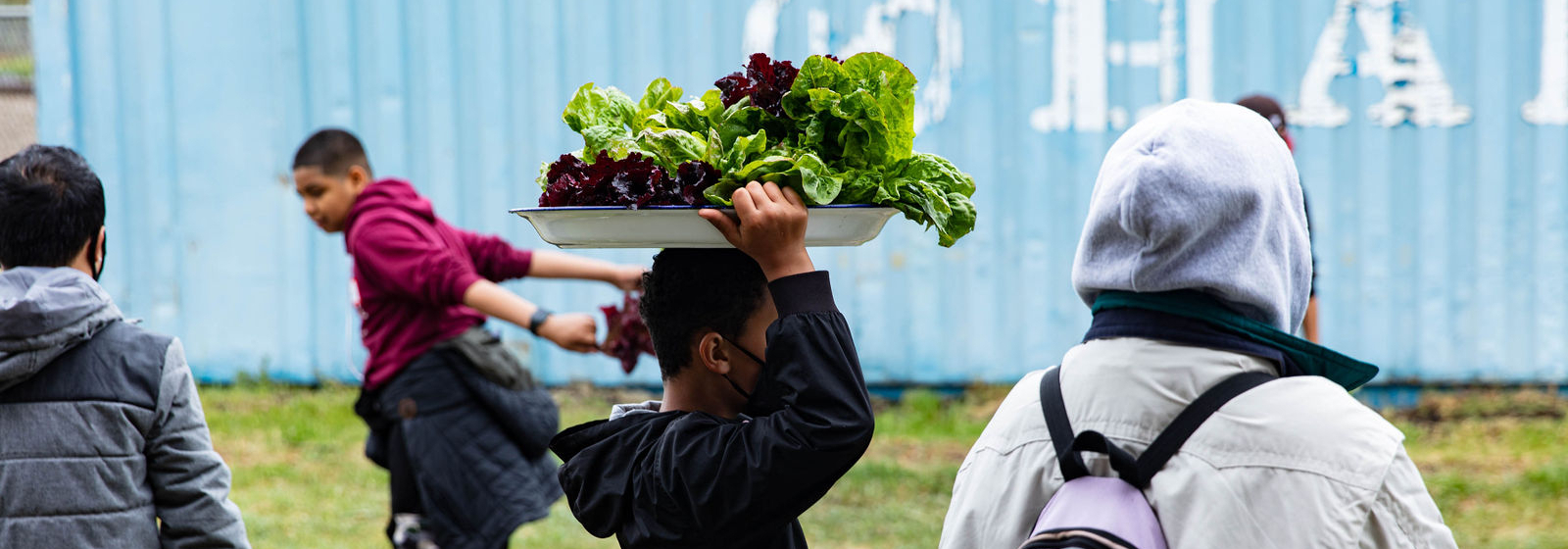
Students participating in an educational event in March 2022 at the Edible Schoolyard Community Farm in Stockton
Credit: Erin Scott