April 9, 2026
What SB 1221 means for neighborhood decarbonization
Our experts identify key questions and discuss what comes next

April 9, 2026
Our experts identify key questions and discuss what comes next
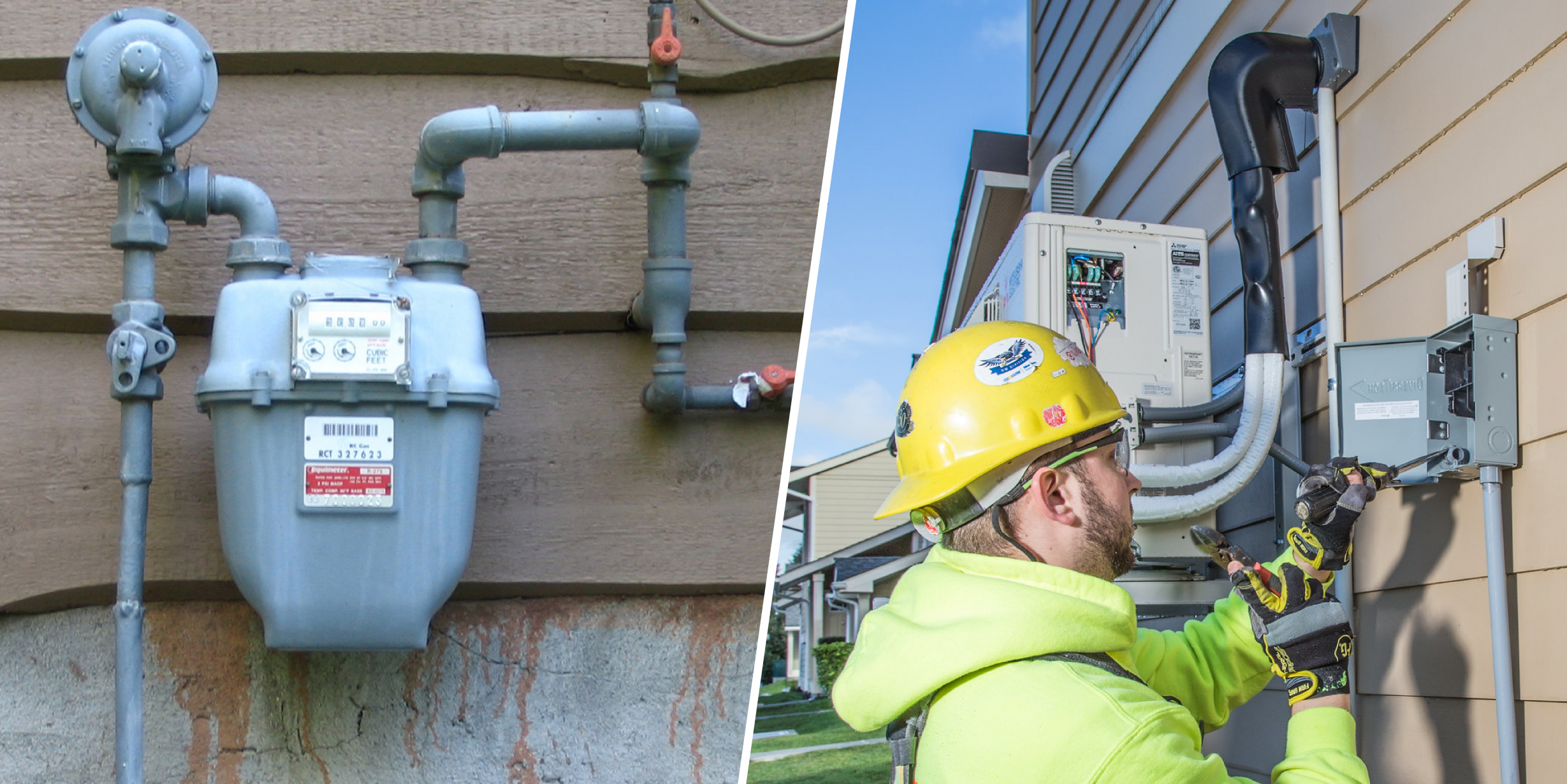
(L) Wikipedia; (R) Marcela Gara, Resource Media, EE Image Database (CC BY-NC 2.0)
California is beginning a new building decarbonization pilot program — one that moves beyond upgrading individual homes to transitioning entire blocks or neighborhoods off natural gas. Senate Bill 1221 (SB 1221) creates a first-of-its-kind pathway for doing this at scale. While the approach offers clear potential to reduce emissions and improve health, it also raises practical questions about how these projects will work on the ground, including who pays, how communities opt in, and how decisions are made.
To help navigate this complex law, the UCLA Luskin Center for Innovation developed an FAQ that examines what is currently known and unknown about SB 1221. Building on existing guidance, the FAQ highlights key implementation questions and offers analysis to support policymakers, practitioners, and community members as the program takes shape.
Read more about these issues and the FAQ in Legal Planet’s article.
Get our latest research in your inbox.
 How data centers are uniting Americans from across the partisan divide
UCLA’s Megan Mullin on the economic and political calculations surrounding AI growth
 Introducing new postdoctoral researcher, Rachel Sheinberg
Learn more about our new team member and her research
 New UCLA tool maps how home electrification could change energy bills across Los Angeles
The public platform enables users to compare household energy costs under likely electrification scenarios
 Sustainable LA Grand Challenge
 Blueprint for a better planet