

Center for Heat Resilient Communities
UPDATE: “Building Heat Resilient Communities: A Toolkit for Local Planning, Decision-Making, & Action” is available now. It presents practical, interactive activities to help communities assess, plan for, and implement strategies to address extreme heat.
Heat poses a growing threat to the economies, health, and security of communities everywhere, yet governance systems remain underdeveloped compared to other hazards. The risks are compounded by the lack of dedicated institutions, processes, and planning frameworks to coordinate heat response and preparedness.
While a growing body of federal, state, and local resources and best practices exists, these lessons from the field have yet to be consolidated into actionable, replicable frameworks that can be deployed across diverse communities to protect people’s health and well-being where they live, learn, work, and play.
The National Oceanic and Atmospheric Administration/National Integrated Heat Health Information System-funded Center for Heat Resilient Communities brought together a network of 50+ researchers, practitioners, and US communities to engage in local heat resilience planning. Led by the UCLA Luskin Center for Innovation, Arizona State University, and the University of Arizona, the network’s intended outputs included:
- Develop a comprehensive framework and interactive toolkit for local heat-resilience action.
- Deliver direct support to select US communities via access to experts, curated and newly developed tools, and capacity-building activities.
- Recommend how communities can become more resilient to heat.
The following 15 communities represent a mix of rural and urban areas and face a variety of heat risks, including health impacts, agricultural losses, and marine heat waves. They were recruited to pilot new tools and resources developed by our network.
Principal Investigators
- Kelly Turner, Associate Professor of Urban Planning and Geography, UCLA (lead PI)
- Ladd Keith, Associate Professor of Landscape Architecture and Planning, University of Arizona (co-PI)
- Sara Meerow, Associate Professor of Geographical Sciences and Urban Planning, Arizona State University (co-PI)
MEDIA INQUIRIES
Contact Dr. V. Kelly Turner
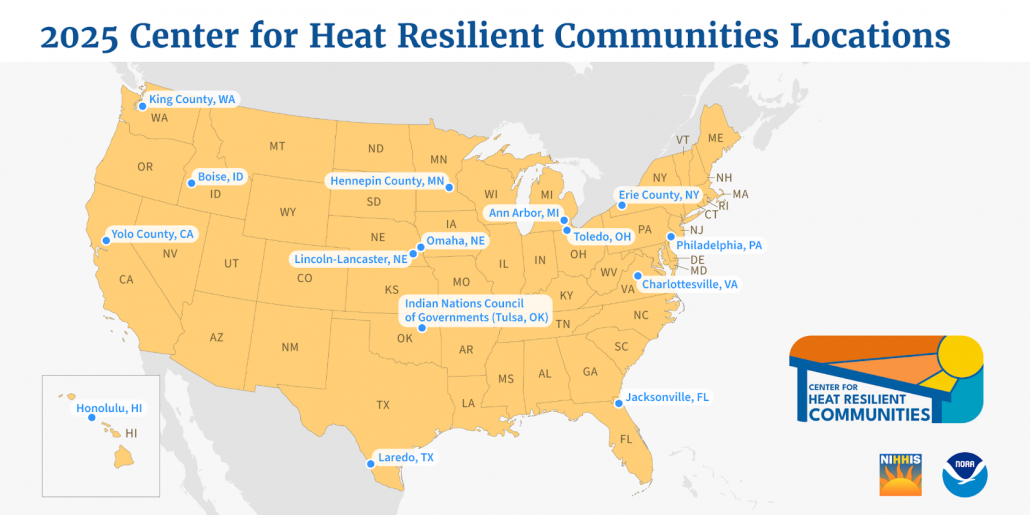
- Ann Arbor, MI. The Ann Arbor Office of Sustainability and Innovations.
- Boise, ID. City of Boise Climate Action Division.
- Charlottesville, VA. City of Charlottesville Office of Sustainability.
- Erie County, NY. Erie County Department of Environment and Planning.
- Hennepin County, MN. Hennepin County Department of Climate and Resiliency.
- Honolulu, HI. The City and County of Honolulu’s Office of Climate Change, Sustainability, and Resiliency.
- Tulsa Metro Area, OK. The Indian Nations Council of Governments.
- Jacksonville, FL. City of Jacksonville Office of Resilience.
- King County, WA. King County Executive Climate Office.
- Laredo, TX. The Rio Grande International Study Center.
- Lincoln-Lancaster County, NE. Lincoln-Lancaster County Health Department.
- Omaha, NE. City of Omaha Planning Department.
- Strawberry Mansion Neighborhood, Philadelphia, PA. City of Philadelphia Office of Sustainability.
- Toledo, OH. City of Toledo Environmental Services Division.
- Yolo County, CA. Valley Vision.
Federal funding for the Center for Heat Resilient Communities was canceled in May 2025. However, to support these recruited communities, the UCLA Luskin Center for Innovation hosted a series of workshops in summer 2025 to provide technical assistance to practitioners.
To continue supporting the cohort, the Atlantic Council’s Climate Resilience Center — a foundational partner of the Center for Heat Resilient Communities — invited the communities to its Heat Resilience Exchange, which helps local governments in the US to prepare for extreme heat. With the support of the Center for Heat Resilient Communities’ leadership, the Exchange offers technical advisory and peer-learning opportunities to inform local heat policies. Members also gain access to unique opportunities, including custom digital platforms and strategic funding support.
With financial support from the UCLA Luskin Center for Innovation, the Center for Heat Resilient Communities’ collective work has been compiled into a toolkit to help communities assess, plan for, and implement strategies to address extreme heat. “Building Heat Resilient Communities: A Toolkit for Local Heat Planning, Decision-Making, & Action” integrates climate modeling, vulnerability assessment, governance, equity, and other considerations to guide data-informed, locally tailored heat action. It is intended for practitioners and presents a comprehensive framework for heat planning, along with a workbook of interactive activities to help communities identify priority strategies. Practitioners who use the workbook will ultimately create a strategy document to guide further action.
Members of the Heat Resilience Exchange and the University of Arizona’s Heat Resilience Initiative are using the toolkit to advance heat-resilience solutions and identify additional gaps in heat-planning guidance for local communities.
To learn more about the Luskin Center for Innovation’s heat research, click here.
Center Leadership and Staff
Kelly Turner, Ph.D.
 Co-Principal Investigator, Engagement Core Lead
Dr. Kelly Turner (she/her) is the Director of the Center for Heat Resilient Communities, Co-Principal Investigator, and a lead author for the Engagement section of the Framework and Workbook. Dr. Turner is an Associate Professor of Urban Planning and Geography and serves as Associate Director of the UCLA Luskin Center for Innovation. She leads the Luskin Center for Innovation’s research on heat, which provides evidence-based approaches to protect people where they live and work. Dr. Turner’s current research encompasses heat governance and policy, planning for climate-resilient communities, and producing actionable data for heat-health. Her work has been published in Nature, Environmental Research Letters, and the Journal of the American Planning Association and funded by the National Science Foundation, the Robert Wood Johnson Foundation, and the Strategic Growth Council of California. Kelly has served as a panelist for the National Academy of Sciences and as a Science Advisor to the Arsht-Rockefeller Extreme Heat Resilience Alliance.
Ladd Keith, Ph.D.
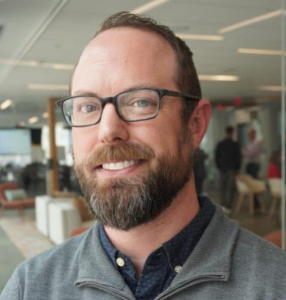 Co-Principal Investigator, Heat Action Planning Core Lead
Dr. Ladd Keith is a Co-Principal Investigator for the Center for Heat Resilient Communities and a lead author for the Heat Action Planning section of the Framework and Workbook. Dr. Keith is an assistant professor in the School of Landscape Architecture and Planning and a faculty research associate at the Udall Center for Studies in Public Policy at the University of Arizona. An urban planner by training, he has over a decade of experience planning for climate change with diverse stakeholders in cities across the U.S. His research explores heat planning, policy, and governance to help communities increase their heat resilience. He is the UA lead of the DOE-funded Southwest Urban Corridor Integrated Field Laboratory (SW-IFL), the heat research lead of the NOAA-funded Climate Assessment for the Southwest (CLIMAS), co-investigator of the CDC-funded Building Resilience Against Climate Effects (BRACE), and co-investigator of the NIH-funded Southwest Center on Resilience for Climate Change and Health (SCORCH). He also serves on the WHO and WMO’s Global Heat Health Information Network (GHHIN)’s Management Committee.
Sara Meerow, Ph.D.
 Co-Principal Investigator, Heat Action Planning Core Lead
Dr. Sara Meerow is a Co-Principal Investigator for the Center for Heat Resilient Communities and a lead author for the Heat Action Planning section of the Framework and Workbook. Dr. Meerow is an Associate Professor in the School of Geographical Sciences and Urban Planning at Arizona State University. She is an interdisciplinary scholar working at the intersection of urban planning and geography to make cities more resilient in the face of climate change and other hazards, while at the same time, more sustainable. Her research focuses on climate change adaptation planning with a focus on heat and flood hazards, green infrastructure, and conceptualizations of urban resilience. Her work on heat resilience planning has been published in Nature, Journal of the American Planning Association, Journal of Planning Education and Research, and by the American Planning Association. Some of her recently funded projects include a National Science Foundation grant on flood resilience planning, Department of Energy-funded work on urban climate resilience, a National Oceanic and Atmospheric Administration-funded project on extreme heat resilience, the National Center for Atmospheric Research’s early career fellowship, and a Humboldt Research Fellowship in Germany.
Trace Lane
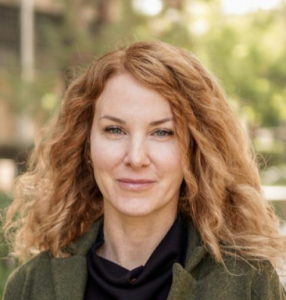 Senior Project Manager
Trace Lane (she/her/hers) is the Senior Project Manager for the Center for Heat Resilient Communities and lead author for the Social, Cultural, and Equity Considerations of Heat section of the Framework. Trace is the Senior Project Manager at the UCLA Luskin Center for Innovation’s Heat Research Team. Trained as an interdisciplinary hydro-social climate scientist, Trace completed a B.S. in Organizational Psychology and an M.P.A. in Political Science and Public Affairs from the University of Alabama, and an M.S.W. – A.M. in International Social Welfare and Human Rights from the University of Chicago. Her interdisciplinary doctoral studies in human rights and governance and coastal resilience management focused on strategies for designing epistemologically diverse climate resilience solutions with indigenous communities in Peru. Trace’s climate resilience work includes designing benefit-cost analysis tools for the Los Angeles Bureau of Street Serves, conducting community-based action research on barriers to wildfire evacuation with the Santa Barbara County Fire Safe Council, conducting socio-legal water rights research for the Human Rights Commission of Maharashtra, India; serving as a senior sustainability consultant to the Environmental Protection Agency; and is the founder of SOCIO, a practice that bridges story with science to describe environmental change and identify sociocultural climate risks.
Zach Wampler
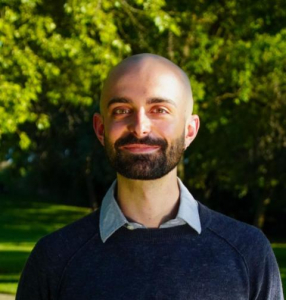 Project Coordinator
Zach Wampler (he/him) is the Project Coordinator for the Center for Heat Resilient Communities. He holds a B.S. in Human & Organizational Development from Vanderbilt University, where he researched how geospatial vulnerability assessment approaches affect environmental managers’ responses to climate hazards and worked with the Mayor’s Office of Metro Nashville and Davidson County to engage the public and build capacity to address heat risk. Prior to joining the Luskin Center for Innovation, he completed an AmeriCorps term with the Sacramento Metro Air Quality Management District, focused on heat mitigation policy and human-scale heat monitoring to inform land-use projects. Zach’s professional interests include urban climate metrics and policy, science translation and education to improve decision-making and build community power, and the use of participatory methods to address sustainability and community resilience.
Anne-Lise Boyer, Ph.D.
Postdoctoral Research Associate
Anne-Lise Boyer is a postdoctoral research associate with Climate Assessment for the Southwest (CLIMAS) at the University of Arizona. CLIMAS is a Climate Adaptation Partnership (CAP), funded by the U.S. National Oceanic and Atmospheric Administration that includes experts from social, physical, and natural sciences who collaborate with partners across the Southwest to develop sustainable solutions for regional climate challenges. Under the guidance of Associate Professor of Planning and Sustainable Built Environments Ladd Keith, Anne-Lise’s work aims to bridge climate science and decision-making to advance heat resilience in rural, tribal, and border communities in the U.S. Southwest. community resilience.
Before joining CAPLA, Anne-Lise was a Postdoctoral Fellow at the International Research Lab Iglobes (CNRS-UA), at Biosphere 2. There, she worked on drought resilience and climate change adaptation, contributing to an interdisciplinary research project on intermittent bodies of water. Her focus was on the relationship of local communities to heavily disturbed and changing waterscapes. Anne-Lise earned her Ph.D. in Geography and Planning from the Ecole Normale Supérieure de Lyon in France, where she examined drought resilience and water conservation strategies implemented by desert metropolises. Originally from France, Anne-Lise developed a keen interest in the socioecological challenges faced by the Southwestern U.S. since her first visit to Tucson as an exchange student in 2015.
Kathrine Wall
Graduate Student Researcher
Kathrine Wall (she/her) is the Graduate Student Researcher supporting the Center for Heat Resilient Communities. She is currently pursuing a Masters of Urban and Regional Planning at the UCLA Luskin School of Public Affairs with a concentration in Climate, Environment, and Society with Urban Design. Her professional background includes data analysis for local, state, and federal projects supporting urban resilience, cultural conservation, and community-focused climate adaptations. Her professional and academic interests include urban climate analytics, local natural disaster resilience planning, and equitable access to public resources. She completed a B.A. in Geography/Environmental Science and Political Science with a minor in Geospatial Information Sciences from UCLA, where she researched inequitable environmental health outcomes as a result of discriminatory housing policies. Her current research focuses on wildfire resilience in hillside communities throughout Los Angeles, CA as well as public access to urban heat resources in Los Angeles, CA and Paris, FR.
Core Leads
Core leads are the experts who led content development for developed resources intended to operationalize best practices across the different dimensions of planning for heat for practitioners and climate champions to implement in their communities through the Center for Heat Resilient Communities.
Ariane Middel, Ph.D.
 Climate Modeling & Microscale Climate Modeling
Dr. Ariane Middel (she/her) is a lead author for the Climate Modeling & Microscale Climate Modeling section of the Framework and Workbook. Dr. Middel is an Associate Professor in the School of Arts, Media & Engineering and the School of Computing & Augmented Intelligence at Arizona State University. Her research interests lie in the interdisciplinary field of urban climate with a focus on extreme heat. Dr. Middel’s applied and solutions-oriented research uses unconventional field methods such as MaRTy (a mobile weather station), microclimate simulations, and human-centric heat exposure modeling. Dr. Middel is the President of the International Association for Urban Climate (IAUC), serves on the Board of the American Meteorological Society (AMS) Built Environment, and directs the SHaDE Lab at ASU. She received an NSF CAREER award on “Human Thermal Exposure in Cities” and has published over 100 peer-reviewed articles in journals such as Nature Communications, BAMS, Sustainable Cities and Society, and Landscape and Urban Planning. Her work has been featured by Good Morning America, CNN, National Geographic, and the New York Times.
Olga Wilhelmi, Ph.D.
 Climate Modeling & Microscale Climate Modeling
Dr. Olga Wilhelmi (she/her) is a lead author for the Climate Modeling & Microscale Climate Modeling section of the Framework and Workbook. Dr. Wilhelmi is a Project Scientist in the Research Applications Laboratory at the NSF National Center for Atmospheric Research (NCAR). Dr. Wilhelmi founded NSF NCAR’s GIS Program, where she leads actionable and convergent research on societal risks and resilience to extreme weather and climate change. Dr. Wilhelmi brings 20 years of experience in extreme heat research and applications, working with communities and decision-makers from local to national levels. Her work has been funded by the National Science Foundation, Environmental Protection Agency and National Aeronautics and Space Administration, and National Oceanic and Atmospheric Administration. Dr. Wilhelmi has recently served as an author on the Human Health Chapter of the Fifth National Climate Assessment. Her current research focuses on responses to heat risks across the U.S.
Florian Schneider, Ph.D.
 Climate Modeling & Microscale Climate Modeling
Dr. Florian A. Schneider (he/him) is a lead author for the Climate Modeling & Microscale Climate Modeling section of the Framework and Workbook. Dr. Schneider is Senior Research Advisor at Third Way’s Climate and Energy Program, where he combines rigorous policy analysis with international collaboration to advance evidence-based strategies for clean energy deployment, industrial decarbonisation, and climate resilience in Europe and the United States. His background bridges climate science, sustainability, and urban heat research, with a focus on equitable and transdisciplinary approaches to climate adaptation. Dr. Schneider earned his Ph.D. in Sustainability from Arizona State University, where his research focused on sustainable urban heat mitigation and co-producing usable, policy-relevant science with city practitioners and communities. He has led major decarbonisation modelling efforts in Poland and Romania, directed the EU-wide Annual Decarbonisation Perspective, and produced policy briefs that inform EU and Member State energy strategies. He also holds BS and MS degrees in Atmospheric Science from Universität Leipzig and previously contributed to the European Space Agency’s EarthCARE mission as a scientific programmer at TROPOS Leipzig, developing satellite data processing algorithms for global climate monitoring.
Elizabeth M Cook, Ph.D.
 Stress Testing, Maturity Modeling, & Tabletop Exercises
Dr. Elizabeth Cook (she/her) is a lead author for the Stress Testing, Maturity Modeling, & Tabletop Exercises section of the Framework and Workbook. Dr. Cook is an Assistant Professor in Environmental Science, Sustainability at Barnard College-Columbia University. Elizabeth is an urban ecosystem scientist. Her work uses mixed methods and participatory approaches to explore cities as complex social-ecological-technological systems. She co-leads a National Science Foundation Growing Convergence project that applies transdisciplinary approaches to explore future sustainability and resilience of North American and Latin American cities to changing climate and extreme events. She works collaboratively with interdisciplinary scientists and local practitioners through participatory methods to envision positive futures and the transformative capacities needed to achieve future climate resilience. She also co-leads the global NATURA network, studying and implementing nature-based solutions to improve urban resilience. Her other current projects explore human-environment interactions and people’s perceptions of nature and ecosystem services under changing environmental conditions.
Theo Lim, Ph.D.
 Stress Testing, Maturity Modeling, & Tabletop Exercises
Dr. Theo Lim (he/him) is a lead author for the Stress Testing, Maturity Modeling, & Tabletop Exercises section of the Framework and Workbook. Dr. Lim is an Associate Professor in the School of Community and Regional Planning at the University of British Columbia. He specializes in research and teaching in urban environmental and climate adaptation planning, environmental science-policy interfaces, and community engagement. He has led two projects that use participatory action research methods to address governance gaps in planning for rising temperatures in Roanoke, Virginia: the H.O.P.E. for Heat Resilience project, funded through the National Science Foundation’s CIVIC Innovation Challenge, and Heat Ready Roanoke, funded through NOAA’s Environmental Literacy Program. His work has been published in the Journal of the American Planning Association, Landscape and Urban Planning, and Sustainable Cities and Society. Theo also serves on the Editorial Team of the journal Planning Theory & Practice.
Jason A. Douglas, Ph.D.
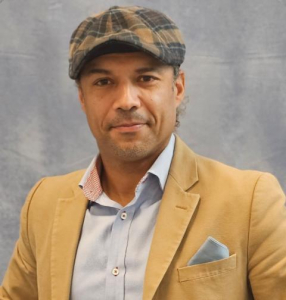 Community Engagement
Dr. Jason A. Douglas is a lead author for the Engagement section of the Framework and Workbook. Dr. Douglas is a community-engaged environmental health disparities researcher in the Department of Health, Society, and Behavior and the Center for Environmental Health Disparities Research at UC Irvine. Leveraging community-based participatory action research, Douglas works with community-based organizations and residents in Black and historically marginalized communities to investigate and redress environmental health disparities. His work ranges from structured observation of neighborhood-level assets and challenges that may encourage or encumber health-promoting behaviors to large-scale geospatial examinations of health and place. His current research examines air pollution and urban heat-related health disparities, legal drug retail (e.g., tobacco shops, liquor stores), access to recreational spaces and physical activity opportunities, and community organizing practices for advancing health and well-being. Supported by state and federal funding, Douglas has developed and adapted innovative participatory methodologies—e.g., structured observation and neighborhood mapping—for examining novel public health challenges.
Chris Uejio, Ph.D.
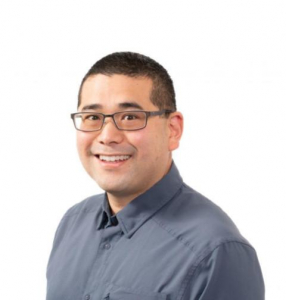 Indicators of Heat Resilience
Dr. Chris Uejio (he/him) is a lead author for the Indicators of Heat Resilience section of the Framework and Workbook. Dr. Uejio is a Professor of Geography and Public Health. Earlier in his career, he worked with public health departments to develop evidence-based extreme heat maps. He partnered with Emergency Medical Services to build the evidence base for indoor heat exposure levels that are harmful to human health. As a member of NASA’s Health and Air Quality Applied Science Team (2020-2024), his team is creating reproducible workflows to map air temperature and the urban heat island effect. Finally, he is a member of a team that evaluates the process and outcomes of extreme heat interventions. This work has been funded by multiple U.S. federal (NASA, NIH, CDC, EPA, NSF, NOAA), state, and non-profit institutions (e.g., Wellcome Trust).
Jennifer Vanos, Ph.D.
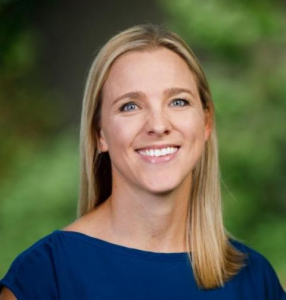 Indicators of Heat Resilience
Dr. Jennifer Vanos is a lead author for the Indicators of Heat Resilience section of the Framework and Workbook. Dr. Vanos is an Associate Professor in the School of Sustainability at Arizona State University. As a human biometeorologist, she works to strengthen the understanding and practice surrounding how we protect people from extreme heat and air pollution in a changing climate. Her work on extreme heat addresses risks and challenges within heat-sensitive and heat-exposed groups, including children, athletes, and outdoor workers. She also runs the HeatReadyTM Schools program at ASU. Dr. Vanos was awarded an NSF Early Career research grant in 2021 and is co-authoring new WHO Heat & Health guidance. She is PI of the Human Biometeorology lab at ASU, a scientific advisor for the Korey Stringer Institute, and Outgoing Chair of the American Meteorological Society’s Board on Environment & Health. Dr. Vanos previously worked at UC San Diego, Texas Tech, and Health Canada, and received her Ph.D. and bachelor’s degrees from the University of Guelph in Canada.
Ronnen Levinson, Ph.D.
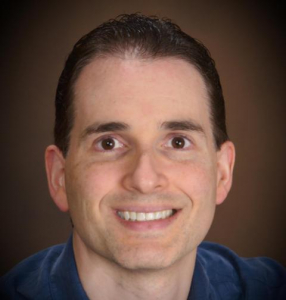 Indicators of Heat Resilience
Dr. Ronnen Levinson is a lead author for the Indicators of Heat Resilience section of the Framework and Workbook. Dr. Levinson is a Staff Scientist and Leader of the Heat Island Group at Lawrence Berkeley National Laboratory (LBNL) in Berkeley, California, where he develops cool roof, wall, and pavement materials; improves methods for the measurement of solar reflectance; quantifies the energy and environmental benefits of cool surfaces; and promotes resilient cooling of people, buildings, cities, and the planet. He serves on the boards and technical committees of the Cool Roof Rating Council and the Global Cool Cities Alliance, and advises policymakers, code officials, utilities, and building rating programs about cool surfaces. He holds a B.S. in engineering physics from Cornell University and an M.S. and a Ph.D. in mechanical engineering from the University of California at Berkeley. He has authored or co-authored over 140 publications, serves as an Associate Editor for Energy & Buildings and a Guest Editor for Nature Scientific Reports, and sits on the editorial boards of Energy & Buildings, Solar Energy Advances, and Nature Scientific Reports. He received the 2016 Marty Hastings Award for outstanding contributions to the Cool Roof Rating Council and a 2016 R&D 100 Award for invention of the Cool Roof Time Machine.
C.J. Gabbe, Ph.D.
 Benefit-Cost Analysis
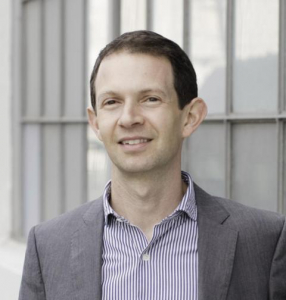
Dr. C.J. Gabbe (he/him) is a lead author for the Benefit-Cost Analysis section of the Framework and Workbook. Dr. Gabbe is an Associate Professor in Santa Clara University’s Department of Environmental Studies and Sciences. His research focuses on identifying and mitigating the impacts of climate hazards in the United States, particularly through land use planning and housing policy interventions. He collaborates with local governments and community-based organizations and serves as co-chair of Santa Clara County’s Heat and Air Quality Resilience Working Group. C.J. has a Ph.D. in Urban Planning from UCLA and a Master of Urban Planning degree from the University of Washington.
Glenn Sheriff, Ph.D.
 Benefit-Cost Analysis
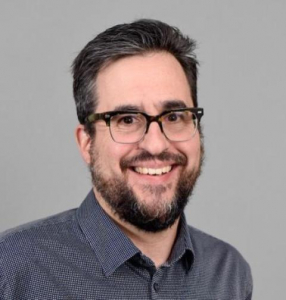
Dr. Glenn Sheriff is a lead author for the Benefit-Cost Analysis section of the Framework and Workbook. Dr. Sheriff is an associate professor in Arizona State University’s School of Politics and Global Studies, with a research focus on the distribution of benefits and costs of environmental, natural resource, and climate policy. He received his master’s and doctorate in agricultural and resource economics at the University of Maryland. Before joining ASU, he taught at Columbia University and served as an economist at several federal agencies, including the U.S. State Department, the White House Council on Environmental Quality, the Environmental Protection Agency, and the Department of Agriculture. His work has been published in outlets such as the Journal of the Association of Environmental and Resource Economists, Nature Communications, Environmental Research Letters, and Demography, and funded by grants from the National Science Foundation, NASA, the U.S. Environmental Protection Agency, and the U.S. Department of Agriculture.
Additional Content Contributors
Additional content contributors are subject matter experts who are developing Roadmap Workbook materials to supplement the resources developed by the core leads.
David Eisenman, Ph.D.
 Heat Alert Development
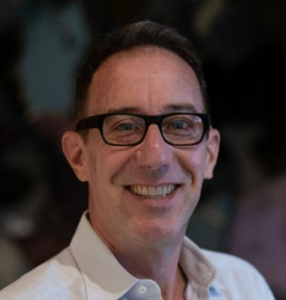
David Eisenman, MD, MSHS, is a professor at the David Geffen School of Medicine at UCLA and has a joint appointment at the UCLA Fielding School of Public Health, where he directs the Center for Public Health and Disasters. Dr. Eisenman is also an Associate Natural Scientist at RAND.
Erin Coutts
 Heat Alert Development
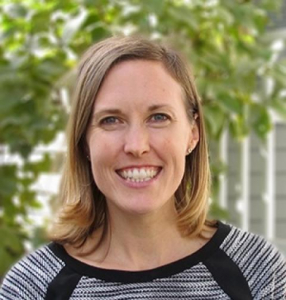
Erin Coutts is the Executive Director of the Los Angeles Regional Collaborative for Climate Action and Sustainability (LARC). Housed at UCLA, LARC is a membership organization that works to facilitate a sustainable and resilient Los Angeles. She is focused on convening local and regional decision-makers who perform climate mitigation and adaptation work. Erin holds a master’s degree in Urban and Environmental Policy and Planning from Tufts University.
Edith de Guzman, Ph.D.
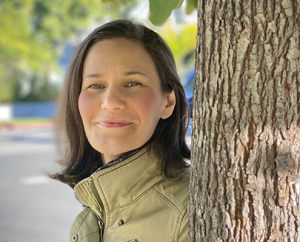 Advisor
Edith B. de Guzman is the water and adaptation policy cooperative extension specialist with the UCLA Luskin Center for Innovation, where her work investigates best practices for the sustainable transformation of the Los Angeles region and beyond in the areas of water management, climate adaptation, heat mitigation, and urban forestry. Dr. de Guzman co-founded the Los Angeles Urban Cooling Collaborative, a multisectoral partnership whose research has shown that upwards of 25% of heat-related deaths and 50% of heat-related emergency room visits could be avoided with land cover modifications, including trees, shade, and reflective surfaces. She earned a PhD at the UCLA Institute of the Environment & Sustainability.
Kara Schlighting, Ph.D.
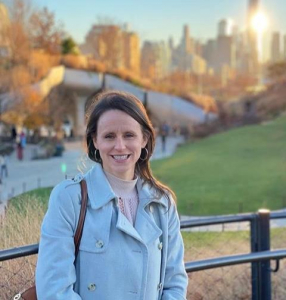 Social and Cultural Considerations
Kara Murphy Schlichting is an Associate Professor of History at Queens College, City University of New York. She earned her Ph.D. from Rutgers, the State University of New Jersey. Dr. Schlichting’s current research explores climatological aspects of environmental history. She is also a co-investigator on the Wellcome Discovery Award project “Melting Metropolis: Everyday Histories of Health and Heat in London, New York, and Paris since 1945,” which explores the impact of climate change and rising temperatures on urban life.
Morgan Rogers, Ph.D.
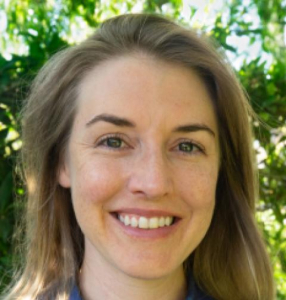 Climate Modeling & Microscale Climate Modeling
Morgan Rogers (she/her) was a doctoral student in UCLA’s Graduate Program in Urban Planning, a graduate student researcher at the UCLA Luskin Center for Innovation, and a National Science Foundation Research Trainee (NSF NRT). She uses remote sensing, GIS, spatial statistics, and 3D modeling methods to study urban environments with the goal of translating this research into actionable insights for environmental planning. At the Luskin Center for Innovation, Morgan applied 3D modeling, shaped by community feedback, to explore and propose effective, low-cost outdoor cooling interventions for communities most impacted by heat.
Sahar Derakhshan, Ph.D.
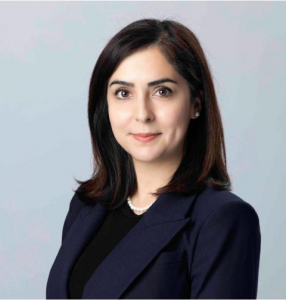 Heat Vulnerability Assessment
Sahar Derakhshan received her doctorate in Geography from the University of South Carolina, her Master of Public Policy (MPP) from the University of California, Berkeley, and her Bachelor of Science in Civil Engineering from the University of Science and Culture, Iran. Dr. Derakhshan employs geospatial analytics in her interdisciplinary research to study and assess the effect of inequalities, institutions, and social and economic status, in taking action to foster change in mitigation planning and disaster recovery, for a safer and more resilient community.

 Descanso Gardens
  @SkyLovesAdventures