By Mara Elana Burstein
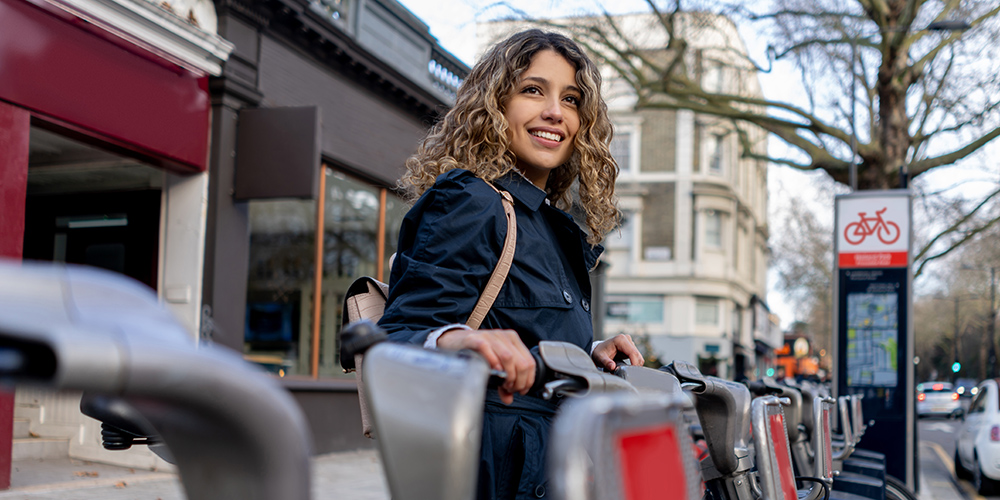
Are you renting shared bikes or scooters to travel to and from transit stops and for other short trips?
Millions of people are using small, low-speed, human- or electric-powered transportation devices — also known as micromobility. So much so that its use has exploded over the last decade. But despite exponential growth, access to these devices is limited among travelers that are low-income, Black, Indigenous, and people of color (BIPOC).
To help address this inequity, the UCLA Luskin Center for Innovation has released a report that highlights equity-oriented micromobility programs to provide access to shared bicycles and scooters in five U.S. cities: Denver, Minneapolis, Oakland, Pittsburgh, and Saint Paul. Drawing from interviews, the report offers pioneering models and actionable steps for government agencies, micromobility providers, and community-based organizations to expand access and affordability among low-income and BIPOC travelers and improve infrastructure in their communities.
The researchers assert that to make micromobility equity programs more accessible and affordable, cities and micromobility providers should take the following steps:
- Redesign equity programs, including pricing models, enrollment processes, memberships, and low-tech payment options;
- Engage mobility-disadvantaged travelers, with the help of community-based organizations;
- Integrate micromobility systems with mass transit, ride-hail/rideshare, etc.; and
- Eliminate, or integrate, equity program applications with existing social service programs.