January 7, 2026
Urban wildfire: water system capacities and limitations
Researchers convene statewide experts to assess firefighting capacity, infrastructure gaps, and policy solutions

January 7, 2026
Researchers convene statewide experts to assess firefighting capacity, infrastructure gaps, and policy solutions

Jennifer Capitolo speaking at the August workshop. Credit: Jason Islas
One year after the January 2025 fires devastated communities across Los Angeles, the region is still reckoning with how its infrastructure performed and whether it should be modified to perform under increasingly extreme conditions. The anniversary has sharpened an urgent policy question with far-reaching consequences: as urban wildfires become more frequent and severe, what role can water systems realistically play in protecting lives, supporting emergency response, and guiding resilient rebuilding? A new UCLA Luskin Center for Innovation publication, Water Systems’ Wildfire Fighting Capacities and Expectations: Workshop Synthesis Report, begins to answer this question.

Policymakers are asking water systems to do more during wildfires, but we need to ground those expectations in evidence. This work helps clarify feasible investments and highlights where coordination—not just infrastructure—can strengthen resilience.
With growing public debate about the ability of systems to deliver high volumes of pressurized water during major fire events, researchers at UCLA, UC Agriculture and Natural Resources’ California Institute for Water Resources, and Arizona State University launched a four-part workshop series to examine water–fire resilience. The effort, funded primarily by UCLA’s Sustainable LA Grand Challenge, aims to strengthen both how communities prepare for and recover from the growing overlap between water systems and wildfire risk.
The first workshop, held in August 2025, brought together 42 participants from water systems, industry associations, nonprofits, regulatory agencies, technical assistance organizations, fire protection, engineering firms, and academia. The goal was to clarify public expectations (often shaped by misinformation and fragmented media narratives) and to examine what is truly feasible and affordable for water systems to do in order to fight wildfire events.
The workshop featured expert panels, small-group activities, and discussions focused on practical considerations for assessing water systems’ wildfire-fighting capacity. Presenters pointed to both the possibilities and limits of current infrastructure, management practices, and agency coordination.
Participants reiterated that no water system can be expected to “stop” large urban wildfires. Hydrants and related infrastructure are not designed to meet enormous and shifting demands, and water supply is only one component of a much broader emergency response.
Water systems already face significant funding and willingness-to-pay limitations (an issue the next workshop will dig into), and adding firefighting capacity could introduce additional tradeoffs. Investments may affect water systems’ ability to pay for drinking water quality, regulatory compliance, earthquake resilience, or public acceptance of new above-ground infrastructure.
Participants stressed “soft” interventions were just as, if not more, important and feasible as “hard” infrastructure upgrades (pipes, hydrants, etc.). Those identified as most important were enhanced and specified coordination before wildfires and more formal agreements between fire agencies and emergency operation centers.
With no statewide requirements for water systems’ wildfire-fighting capacity, participants explored what, if any, role statewide guidance, standards, and frameworks related to water supply and wildfire fighting should play. While best practices could support cross-learning, rigid mandates could create legal and financial challenges.
Participants discussed a range of strategies and needs being explored across California—such as modular auxiliary water pumping systems, enhanced water-fire coordination in certain counties, and improved crisis communication to stem the flow of misinformation. Whether these promising examples can scale or be replicated remains an open question.
As communities across the West confront more frequent and severe urban wildfires, water systems, firefighters, researchers, policymakers, and residents face pressing decisions about preparedness and resilience. The workshop raised important questions and generated critical discussions about what water systems can realistically provide in terms of wildfire fighting during extreme events—and where other investments may make a bigger difference.
For examples of related work, see Do Urban Water Supply Systems Put Out Wildfires? (Frequently Asked Questions) and Redefining Expectations for Urban Water Supply Systems to Fight Wildfires (comment in Nature Water 2025).
Learn more about our water systems and fire resilience research.
Get our latest research in your inbox.
 The Luskin Center for Innovation welcomes new doctoral researchers
Learn more about their interests and work.
 UCLA Luskin Center for Innovation 2025 Impact Report
Informing effective and equitable environmental policy solutions.
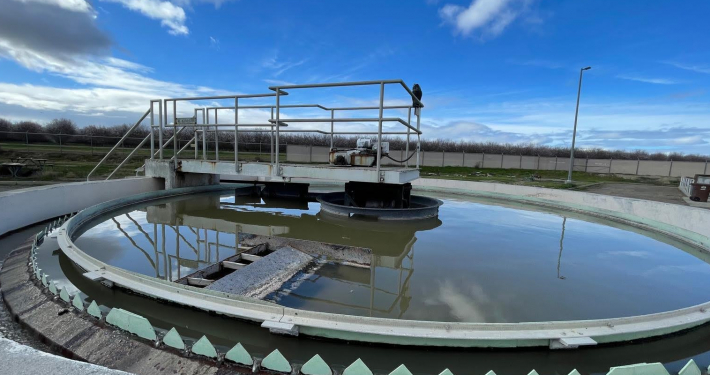 Phase 1 of statewide wastewater assessment sets foundation for equitable solutions
UCLA-led research delivers the first statewide baseline of wastewater system risks, gaps, and solutions to support equitable infrastructure planning in California.

 UCLA Luskin Center for Innovation 2025 Impact Report