April 29, 2026
Water, fire, and finance: building more resilient systems
UCLA-led convening highlights need for clearer roles, stronger coordination, and more equitable financing strategies

April 29, 2026
UCLA-led convening highlights need for clearer roles, stronger coordination, and more equitable financing strategies
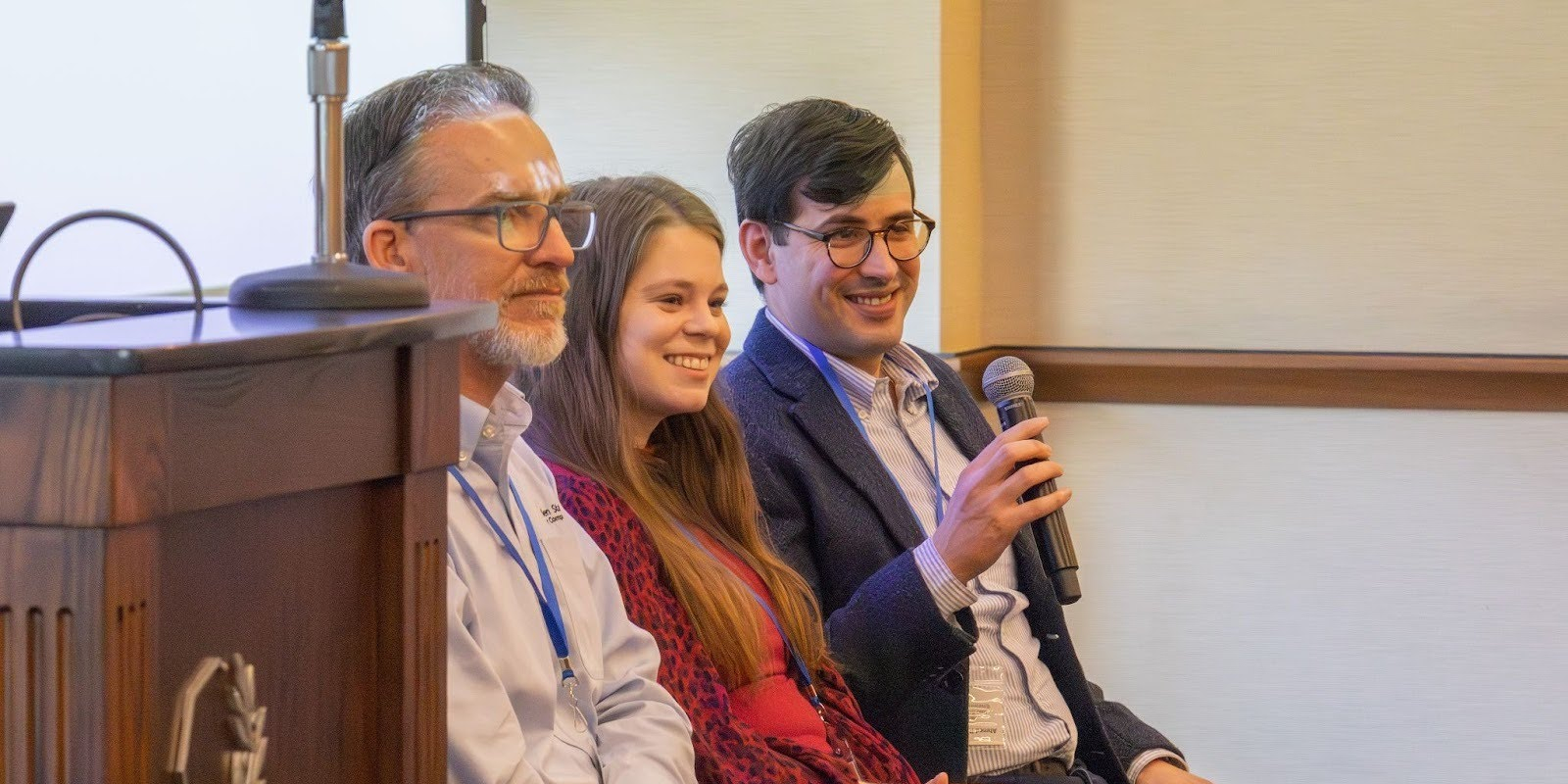
Panel 1 presenters Mark Insco (Golden State Water), Jennifer Gorman (UCLA Luskin Center for Innovation), and A.R. El-Khattabi (UNC Chapel Hill Environmental Finance Center). Credit: Sustainable LA Grand Challenge
Key Takeaways
Wildfires Are Challenging Water Systems
The January 2025 fires in Los Angeles County exposed a critical gap: water systems were never designed to fight large-scale wildfires. As fire risks intensify, communities are asking what the role of water systems should be in extreme events moving forward and how these systems can remain reliable, affordable, and resilient.
On January 23, 2026, the UCLA and UC ANR Urban Water Supply + Fire working group — organized by the Sustainable LA Grand Challenge, Luskin Center for Innovation, and the California Institute for Water Resources — convened 54 experts to examine a critical and underexplored issue: how to finance water systems as fire risks change and intensify. The workshop organizers have just released a report, Water Supply Systems, Fire, and Finance, synthesizing key insights from the convening.
What the Experts Found
Participants emphasized that adapting water systems for wildfire response is both financially and logistically challenging. Funding constraints, including Proposition 218, limit how utilities can raise revenue, while disasters can sharply reduce income.
Further, fire suppression depends on the close coordination of two distinct local agency types – fire departments and water agencies – which are governed, funded, and operated very differently. Agency coordination varies widely; informal relationships may work for everyday needs, but often fall short during large-scale emergencies.

Water systems are being asked to do more than they were ever designed to do, without the funding structures to support it.
Why It Matters
Water systems must now balance drinking water quality, affordability, and long-term stability, while responding to growing wildfire risks. The experts call for an “all-options” approach, including better coordination, new financing strategies, and investments that improve system resilience, however, it was cautioned that water systems should have a limited role in fighting wildfires.
We need to rethink how we finance resilience so costs and benefits are shared more equitably.
What’s Next
Workshop 3: Addressing Post-Fire Challenges with Drinking Water Quality, Public Trust, and Communications will take place in May.
To learn more, read the Workshop 2 summary in Maven’s Notebook and the synthesis report for Workshop 1.
Get our latest research in your inbox.
 How data centers are uniting Americans from across the partisan divide
UCLA’s Megan Mullin on the economic and political calculations surrounding AI growth
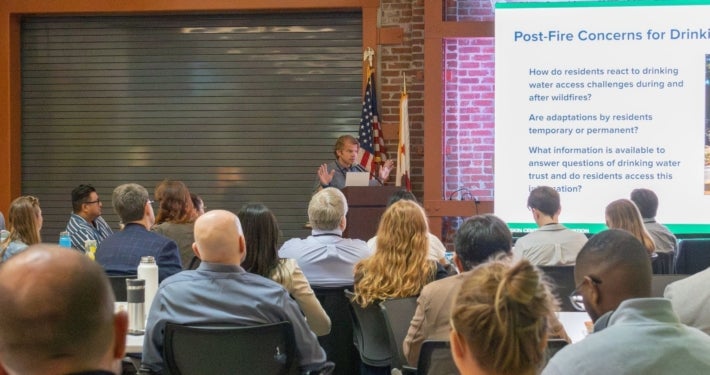 Selin Filiz, Sustainable LA Grand Challenge
Restoring public confidence in drinking water after wildfires
Selin Filiz, Sustainable LA Grand Challenge
Restoring public confidence in drinking water after wildfires
UCLA-led workshop with more than 50 experts identifies communications, research, and policy priorities
 Blueprint for a better planet
How Luskin Center for Innovation and other parts of UCLA are advancing a healthier, more sustainable future.

 New UCLA tool maps how home electrification could change energy bills across...