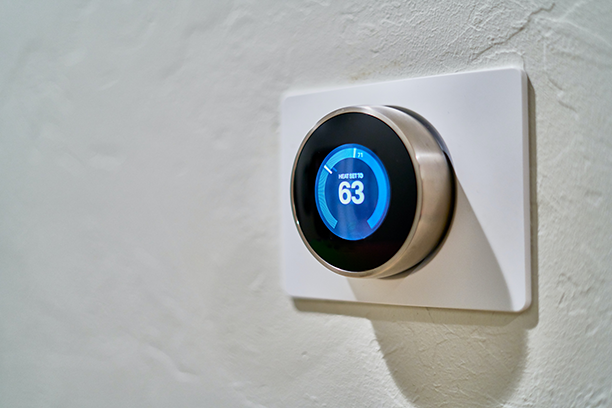
Smart thermostatEnergy efficiency gains support goals of economic growth, energy security, and environmental sustainability while reducing consumers’ energy bills. While energy efficiency is improving around the world, much potential remains untapped. The global transition to a clean energy future requires both new and improved efficiency policies and incentives, with a focus on their effective and equitable access and benefits for low-income households, small businesses, and other electricity ratepayers.

Research from the Luskin Center for Innovation informs the next generation of clean energy programs. Example studies follow.

CURRENT PROJECT(S)

The Luskin Center for Innovation is partnering with Redeemer Community Partnership to lay the groundwork for residential gas decommissioning in and around the Exposition Park neighborhood of South Los Angeles. The project is part of Justice First: an international collaboration in which academic researchers and community-based organizations have joined together to develop hyperlocal, community-led energy transition plans. The project includes a comparison across project sites to identify commonalities and differences among locally grounded energy transition efforts globally. The team is examining how neighborhood-scale gas decommissioning might help South LA communities address the risk of rising gas distribution costs, while supporting residential electrification, integrating equity and justice principles, and building community capacity.

Researcher(s): Gregory Pierce, Lauren Dunlap, Richard Parks, and Sooji Yang
Funder: Justice First project / New Frontiers in Research Fund – International

This new engaged research builds on the Luskin Center for Innovation’s past clean energy affordability recommendations for the LA Department of Water and Power.

Learn more

Researcher(s): Gregory Pierce, Lauren Dunlap, Dan Coffee, Stephanie Pincetl, and Rachel Sheinberg
Funder: Los Angeles Department of Water and Power

PUBLISHED RESEARCH

Author(s): Julia Skrovan, Lauren Dunlap, and Rachel Sheinberg
Funder: Los Angeles Department of Water and Power

The Los Angeles Residential Energy Transition Tool estimates how LA households’ energy use and bills will be affected by home electrification and the renewable energy transition.

See the tool

Researcher(s): Rachel Sheinberg, Will Callan, and Lauren Dunlap
Funder: Los Angeles Department of Water and Power

This technical guide documents the logic, data sources, capabilities, scenarios, and variables of the Los Angeles Residential Energy Transition (L.A. RESET) Tool.

Read the guide

Lessons From a Promising Case Management Pilot

Author(s): Lauren Dunlap, Sooji Yang, and Gregory Pierce

This research evaluates a home electrification pilot program that integrates early home assessments and a case management approach to upgrade electrical panels in low-income households. The findings show that these approaches lowered barriers to electrification and highlight opportunities to make programs more accessible through fully funded upgrades, streamlined processes, and a universal home assessment.

Read the report

Frequently Asked Questions

Researcher(s): Sooji Yang, Lauren Dunlap, and Gregory Pierce

This FAQ explores how California’s neighborhood-scale building decarbonization initiative fits into the state’s transition off of fossil fuels—and how it will affect residents.

Download the FAQ

Educational Materials on the Purpose, Benefits, Costs, and Process of Residential Building Electrification and Neighborhood Gas Decommissioning

Researcher(s): Sooji Yang, Lauren Dunlap, Greg Pierce, and Richard Parks
Funder: New Frontiers in Research Fund – International

This fact sheet and list of frequently asked questions outline the purpose, benefits, costs, and other information about residential building electrification and neighborhood gas decommissioning in California.

Read in English | Leer en Español

Energy Spending and Burden Projections from the L.A. Residential Energy Transition Tool

Researcher(s): Lauren Dunlap, Rachel Sheinberg, Will Callan, Samantha Smithies, and Gregory Pierce
Funder: Los Angeles Department of Water and Power (LADWP)

The researchers use the LA Residential Energy Transition (RESET) Tool to project energy affordability outcomes of home electrification across Los Angeles. They find that most electrification upgrades lead to ongoing energy savings for LADWP customers, while maintaining gas appliances nearly always leads to higher energy spending.

Learn more | See methods and data | Read the report

Barriers, Needs, and Progress Toward an Equitable Energy Transition

Researcher(s): Lauren Dunlap, Rachel Sheinberg, Will Callan, Samantha Smithies, and Gregory Pierce
Funder: Los Angeles Department of Water and Power (LADWP)

LADWP is developing its clean energy transition strategy in response to the 2023 LA100 Equity Strategies study. Based on agency staff interviews, this report highlights the need for ambitious, concrete, and transparent public commitments and recommends more accessible public information sharing and community engagement, citywide collaboration, and a centralized data management system.

Read the report

Researcher(s): Rachel Sheinberg, Gregory Pierce, Stephanie Pincetl, Gregory Reed

This study synthesized lessons from the LA100 Equity Strategies initiative, a collaboration between UCLA, L.A. Department of Water and Power, National Renewable Energy Laboratory, and local community-based organizations, to support urban just energy transition efforts elsewhere.

Read the article

Researcher(s): Gregory Pierce, Kelly Trumbull, and Dan Coffee

To support Los Angeles’s transition to 100% renewable electricity by 2035, this chapter provides specific recommendations for robust, long-term, structural solutions to LADWP’s customers’ ability to pay their bills. The complete LA 100 Equity Strategies Study includes chapters written by other UCLA researchers, including those with expertise in engineering, environmental science, law, labor studies, public health, and public policy.

Read more | Read the report

Evidence From Los Angeles County

Researcher(s): Nicholas Chow, JR DeShazo, Omar Moghaddam

This research explores the energy needed for advanced water treatment processes, specifically for direct potable reuse, and seeks to inform decision-makers. This study uses the County of Los Angeles as a case study to quantitatively examine the water, energy, and greenhouse gas tradeoffs of utilizing different water supply sources. Read more.

Read the report

Adapting Outreach and Enrollment Strategies in the San Joaquin Valley

Researcher(s): Gregory Pierce, Rachel Connolly, and Kelly Trumbull

This report analyzes an adaptation of the original emPOWER approach to provide more targeted support to Southern California Edison-served households in Kings and Tulare counties. The most novel distributive impact of the pilot was connecting households to Arrearage Management Plan, a debt forgiveness program.

Read more | Read the report

Author(s): Julien Gattaciecca, Kelly Trumbull, Samuel Krumholz, Kelley McKanna, and J.R. DeShazo
Funder: California Energy Commission

In order to understand the most effective electricity demand response program designs, the Luskin Center for Innovation conducted a multi-year study. The study revealed that offering participants financial rewards, on top of the amount of money they’d save simply for using less energy, had a measurable effect on reducing their energy use — although the amount of the financial incentive made relatively little difference. Further, automation devices (like smart thermostats) proved to be key to reducing energy use during times of high stress on the electrical grid, like heat waves. Study results informed policymakers, utilities, and demand response providers on the most efficient demand response program designs.

Read the policy brief

Author(s): Julien Gattaciecca, Kelly Trumbull, Samuel Krumholz, Kelley McKanna, J.R. DeShazo
Funder: California Energy Commission

In order to understand the most effective electricity demand response program designs, the Luskin Center for Innovation conducted a multi-year study. The study revealed that offering participants financial rewards, on top of the amount of money they’d save simply for using less energy, had a measurable effect on reducing their energy use — although the amount of the financial incentive made relatively little difference. Further, automation devices (like smart thermostats) proved to be key to reducing energy use during times of high stress on the electrical grid, like heat waves. Study results informed policymakers, utilities, and demand response providers on the most efficient demand response program designs.

Read the report

Researcher(s): Gregory Pierce, Colleen Callahan, and Rachel Connolly
Funder: The Liberty Hill Foundation

The researchers evaluated emPOWER, a coordinated outreach project connecting low-income households with energy efficiency, solar energy, low-carbon transportation, and financial assistance programs. The pilot activated community-based organizations to conduct outreach, information sharing, and technical assistance to help eligible residents sign up for free programs that can help them save money and conserve energy. The evaluation found that the campaign has been successful in reaching areas of L.A. County impacted by poverty and pollution, and offers potential as a replicable model.

Read the report

A Case Study of Investments by the Los Angeles Department of Water and Power

Researcher(s): J.R. DeShazo, Jason Karpman, Weilong (David) Kong, Colleen Callahan, Britta McOmber, and Mara Elana Burstein

This study found that Los Angeles Department of Water and Power’s suite of energy efficiency programs continue to perform well because they generate energy cost savings for customers, leverage co-investment from residents and businesses, and rely heavily on local labor for program activities.

Read the report

Researcher(s): J.R. DeShazo, Alex Turek, Michael Samulon

This study found that Los Angeles Department of Water and Power’s suite of energy efficiency programs continue to perform well because they generate energy cost savings for customers, leverage co-investment from residents and businesses, and rely heavily on local labor for program activities.

Read the report

An Atlas of Investment Potential in Los Angeles County Version 2.0

Author(s): Colleen Callahan, J.R. DeShazo, Henry McCann, and Norman Wong

In response to then President Obama’s Climate Data Initiative, the Luskin Center for Innovation and the Environmental Defense Fund released the Los Angeles Solar and Efficiency Report (LASER) — a data-driven mapping tool designed to help communities identify opportunities to invest in projects that will save households money, create clean energy jobs, and strengthen climate resilience. The tool illustrates existing pollution and climate change impacts at a community level and illustrates “hot spots” ripe for rooftop solar investment and energy efficiency building potential at the parcel level.

Read the report

An Assessment of the Costs and Benefits of Energy Security Investments for the San Pedro Bay Ports

Author(s): Ryan Matulka, J.R. DeShazo and Colleen Callahan
Funder: The Aquamarine Institute, with support from Ports of Los Angeles and Long Beach

The researchers created a framework to study electricity consumption and evaluate energy management strategies at the Ports of Los Angeles and Long Beach. The report served as a foundation for future energy management planning by the ports, including energy efficiency and local energy generation.

Read the report

Investing in Jobs, Energy Efficiency, and Renewable Resources

Author(s): J.R. DeShazo, Colleen Callahan, and Elizabeth Beryt
Funder: Los Angeles Business Council

The researchers analyzed strategies for the implementation of California Clean Energy Jobs Act (Proposition 39) funds to help maximize long-term investment in energy efficiency and clean energy, and the associated jobs and other benefits for Californians. The authors found that the funds could quadruple through the use of revolving investment mechanisms. The research helped inform investment mechanisms for Proposition 39 and other related campaigns.

Read the report

Streamlining Home Electrification in the Gateway Cities (2026 report)

Author(s) Lauren Dunlap, Sooji Yang, and Gregory Pierce

This research evaluates a home electrification pilot program that integrates early home assessments and a case management approach to upgrade electrical panels in low-income households. The findings show that these approaches lowered barriers to electrification and highlight opportunities to make programs more accessible through fully funded upgrades, streamlined processes, and a universal home assessment.

Implementing LA100 Equity Strategies (2025 report)

Researchers: Lauren Dunlap, Rachel Sheinberg, Will Callan, Samantha Smithies, and Gregory Pierce

LADWP is developing its clean energy transition strategy in response to the 2023 LA100 Equity Strategies study. Based on agency staff interviews, this report highlights the need for ambitious, concrete, and transparent public commitments and recommends more accessible public information sharing and community engagement, citywide collaboration, and a centralized data management system.

The Energy Implications of Greater Reliance on Direct Potable Reuse Water Recycling in Import-Reliant Regions: Evidence from Los Angeles County (2023 report)

Researchers: Nicholas Chow, JR DeShazo, Omar Moghaddam

This research explores the energy intensities to implement an advanced water treatment process, specifically for direct potable reuse, and seeks to inform decision makers on important considerations facing water managers, energy managers, and environmental actors. This study uses the County of Los Angeles as a case study to quantitatively examine the water, energy, and greenhouse gas tradeoffs of utilizing different water supply sources.

Supporting Household Access to Complex Low-Income Energy Assistance programs (2022 report)

Researchers: Gregory Pierce, Rachel Connolly, and Kelly Trumbull

This report analyzes an adaptation of the original emPOWER approach to provide more targeted support to Southern California Edison-served households in Kings and Tulare counties. The most novel distributive impact of the pilot was connecting households to Arrearage Management Plan, a debt forgiveness program.

Identifying Effective Demand Program Designs for Residential Customers 

(2021 report and policy brief)

Lead Researchers: Julien Gattaciecca, Kelly Trumbull, and J.R. DeShazo

Both how much and when electricity is consumed matter for the environment. Electricity is likely to be cleaner at noon when the sun is shining on solar panels than in the early evening when the grid may rely more on fossil fuel generators. This is why demand response programs can help electricity customers understand when to conserve electricity to maximize savings and better help the environment and the grid.

In order to understand the most effective demand response program designs, we conducted a multi-year study funded by a California Energy Commission grant of more than $2 million. The study revealed that offering participants financial rewards, on top of the amount of money they’d save simply for using less energy, had a measurable effect on reducing their energy use — although the amount of the financial incentive made relatively little difference. Further, automation devices (like smart thermostats) proved to be key to reducing energy use during times of high stress on the electrical grid, like heat waves. Study results will inform policymakers, utilities, and demand response providers on the most efficient demand response program designs.

Evaluation of emPOWER: Grassroots Outreach to Connect Low-Income Households with Clean Energy Programs 

(2020 report)
Researchers: Gregory Pierce, Colleen Callahan, and Rachel Connolly

The Liberty Hill Foundation commissioned LCI to evaluate emPOWER, a coordinated outreach project connecting low-income households with energy efficiency, solar energy, low-carbon transportation, and financial assistance programs. The pilot activated community-based organizations to conduct outreach, information sharing, and technical assistance to help eligible residents sign up for free programs that can help them save money and conserve energy. LCI’s evaluation found that the campaign has been successful in reaching areas of L.A. County impacted by poverty and pollution, and offers potential as a replicable model for the state.

Quantifying the Economic Benefits of Energy Efficiency Programs in Los Angeles 

(2019 and 2014 reports) 
Authors of 2019 report: J.R. DeShazo, Jason Karpman, Weilong (David) Kong, and Colleen Callahan
Authors of 2014 report: J.R. DeShazo, Alex Turek, Michael Samulon

A series of studies assessed the economic and employment benefits of Los Angeles Department of Water and Power’s (LADWP’s) energy efficiency programs. A common finding across the investment periods, and two similar but differing sets of LADWP energy efficiency programs, is that the investments on average supports more local jobs per dollar of investment than the oil and gas sector, a common benchmark for comparing investments in energy resources.

The first report informed an industry-leading energy efficiency commitment announced by Mayor Eric Garcetti in 2014. This policy sets a 15 percent reduction in electricity consumption in Los Angeles through energy efficiency measures.

Our follow-up report assesses recent progress. This study, released in 2019, found that LADWP’s suite of energy efficiency programs continue to perform well because they generate energy cost savings for LADWP customers, leverage co-investment from residents and businesses, and rely heavily on local labor for program activities.

Achieving Prop 39’s Clean Energy Promise 

(2013 report)
Authors: J.R. DeShazo, Colleen Callahan, and Elizabeth Beryt

The California Clean Energy Jobs Act (Proposition 39), passed by voters in November of 2012, allocates up to $550 million per year for five years to energy efficiency and clean energy projects in California’s public schools, community colleges, universities, and other public facilities. An LCI report, commissioned by the Los Angeles Business Council, analyzed strategies for the implementation of Proposition 39 funds to help maximize long-term investment in energy efficiency and clean energy, and the associated jobs and other benefits for Californians. The authors found that Proposition 39 funds could quadruple through the use of revolving investment mechanisms. The research helped informed investment mechanisms for Proposition 39 and other related campaigns.

Assessing Solar and Efficiency Opportunities: Part of President Obama’s Climate Data Initiative 

(2014 report)
Authors: Colleen Callahan, J.R. DeShazo, Henry McCann, and Norman Wong

In response to, and recognized by President Obama’s Climate Data Initiative, the UCLA Luskin Center and Environmental Defense Fund released the Los Angeles Solar and Efficiency Report (LASER). LASER is a data-driven mapping tool designed to help communities identify opportunities to invest in projects that will save households money, create clean energy jobs, and strengthen climate resilience. The tool illustrates existing pollution and climate change impacts at a community level and illustrates “hot spots” ripe for rooftop solar investment and energy efficiency building potential at the parcel level.

Planning for Port Energy Resiliency 

(2013 report)
Authors: Ryan Matulka, J.R. DeShazo and Colleen Callahan

The San Pedro Bay Ports, comprising the Ports of Los Angeles and Long Beach, are the two busiest ports in the U.S. The Aquamarine Institute, with support from these ports, commissioned LCI to create a framework to study electricity consumption and evaluate energy management strategies at the San Pedro Bay Ports. The report served as a foundation for future energy management planning by the San Pedro Bay Ports, including energy efficiency and local energy generation.