• Advancing energy and water equity in Los Angeles

    Research to inform the L.A. Department of Water and Power’s investments, programs, and climate resilience

Key Takeaways

  • Building on a decade of collaboration, UCLA Luskin Center for Innovation research informs the Los Angeles Department of Water and Power’s (LADWP) efforts to advance equitable energy and water solutions for Los Angeles.
  • Our researchers provide tools and recommendations to help LADWP evaluate investments, improve programs, and assess progress toward 100% carbon-free electricity and sustainable local water supplies.
  • Our experts are helping Los Angeles prioritize affordability, tap water trust, and community engagement as the city expands recycled water supplies.

Get our latest research in your inbox.

Los Angeles is transitioning to clean energy and local water supplies to address climate change and strengthen resilience. The UCLA Luskin Center for Innovation is working with the Los Angeles Department of Water and Power (LADWP) to inform equitable approaches to these transitions, focused on residents who face the greatest barriers to affordable, reliable services.

As LADWP works toward its goal of 100% carbon-free electricity by 2035, our research informs how the utility can advance a more equitable energy system. Principally, UCLA researchers are guiding the implementation of LA100 Equity Strategies, a community-informed study identifying pathways to a more equitable clean energy transition. Through ongoing research, community engagement, and advice to utility staff, we inform efforts to improve energy affordability and expand access to clean energy benefits.

Our team brings the same equity focus to the city’s transition to local water supplies. Los Angeles is investing heavily in recycled water to increase the resiliency of local drinking water supplies to future costs, earthquakes, and climate-induced drought. We are developing a long-term framework for equitable water access, informed by the needs, preferences, and expertise of communities facing inequities in the water system.

Description

Author(s): Gregory Pierce, Kelly Trumbull, and Dan Coffee

To support Los Angeles’s transition to 100% renewable electricity by 2035, this chapter provides specific recommendations for robust, long-term, structural solutions to LADWP’s customers’ ability to pay their bills. The complete LA 100 Equity Strategies Study includes chapters written by other UCLA researchers, including those with expertise in engineering, environmental science, law, labor studies, public health, and public policy.

See the Report – “LA100 Equity Strategies, Chapter 13: Energy Affordability and Policy Solutions Analysis“

Description

Technical Advisory Recommendations for the Region

Author(s): Edith B. de Guzman and Gregory Pierce

This report is the result of convening an independent group of technical experts and facilitating a collaborative process to secure guidance on how to optimize wastewater recycling projects in the LA region. Eight specific recommendations are provided.

See the Report – “Making the Most of Landmark Recycled Water Investments in Los Angeles“

Description

How Does Pure Water LA (Operation Next) Prepare the City for an Uncertain Future?

Author(s): Nicholas Chow, Gregory Pierce, Benjamin Bass, Naomi Goldenson, Adam Barsch, David Kong, Alex Hall, and J.R. DeShazo

We developed a model to analyze the economic and resiliency value of investing in wastewater recycling infrastructure to create a new local, sustainable clean drinking water source. This analysis can inform broader planning efforts in the U.S. and beyond.

See the Report – “The Resilience Value of Recycled Water for Los Angeles“

Description

Barriers, Needs, and Progress Toward an Equitable Energy Transition

Author(s): Lauren Dunlap, Rachel Sheinberg, Will Callan, Samantha Smithies, and Gregory Pierce

LADWP is developing its clean energy transition strategy in response to the 2023 LA100 Equity Strategies study. Based on agency staff interviews, this report highlights the need for ambitious, concrete, and transparent public commitments and recommends more accessible public information sharing and community engagement, citywide collaboration, and a centralized data management system.

See the Report – “Implementing LA100 Equity Strategies“

Description

Energy Spending and Burden Projections from the L.A. Residential Energy Transition Tool

Author(s): Lauren Dunlap, Rachel Sheinberg, Will Callan, Samantha Smithies, and Gregory Pierce

The researchers used the LA Residential Energy Transition (RESET) Tool to project energy affordability outcomes of home electrification across Los Angeles. They find that most electrification upgrades lead to ongoing energy savings for LADWP customers, while maintaining gas appliances nearly always leads to higher energy spending.

See the Report – “Impacts of Household Electrification on Energy Affordability in Los Angeles“

Description

An Expert Convening on Wildfire and Climate Solutions

Author(s): Gregory Pierce, Lauren Dunlap, and others

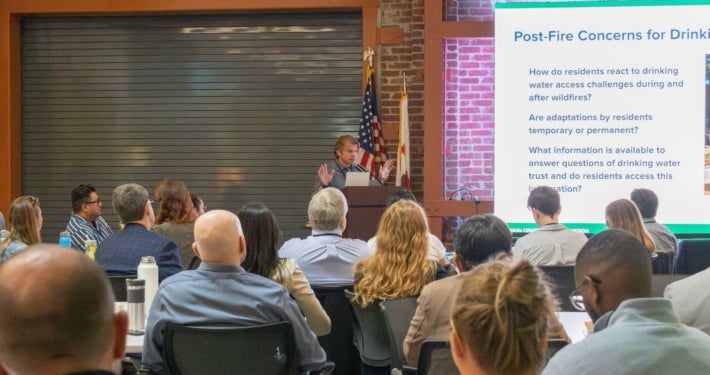
In the wake of catastrophic firestorms in L.A., LADWP and UCLA convened more than 100 academic, industry, and government stakeholders to answer a critical question: How can LADWP help build a more resilient city by adopting new and emerging technologies and strategies? The one-day, intensive workshop provided a venue for open, timely information sharing and advanced collaborative efforts to spur innovation in four key areas: advanced metering infrastructure, utility undergrounding, water distribution system infrastructure, and wildfire risk assessment.

See the Report – “Innovation Opportunities for a Resilient L.A.“

Description

Author(s): Julia Skrovan, Lauren Dunlap, and Rachel Sheinberg

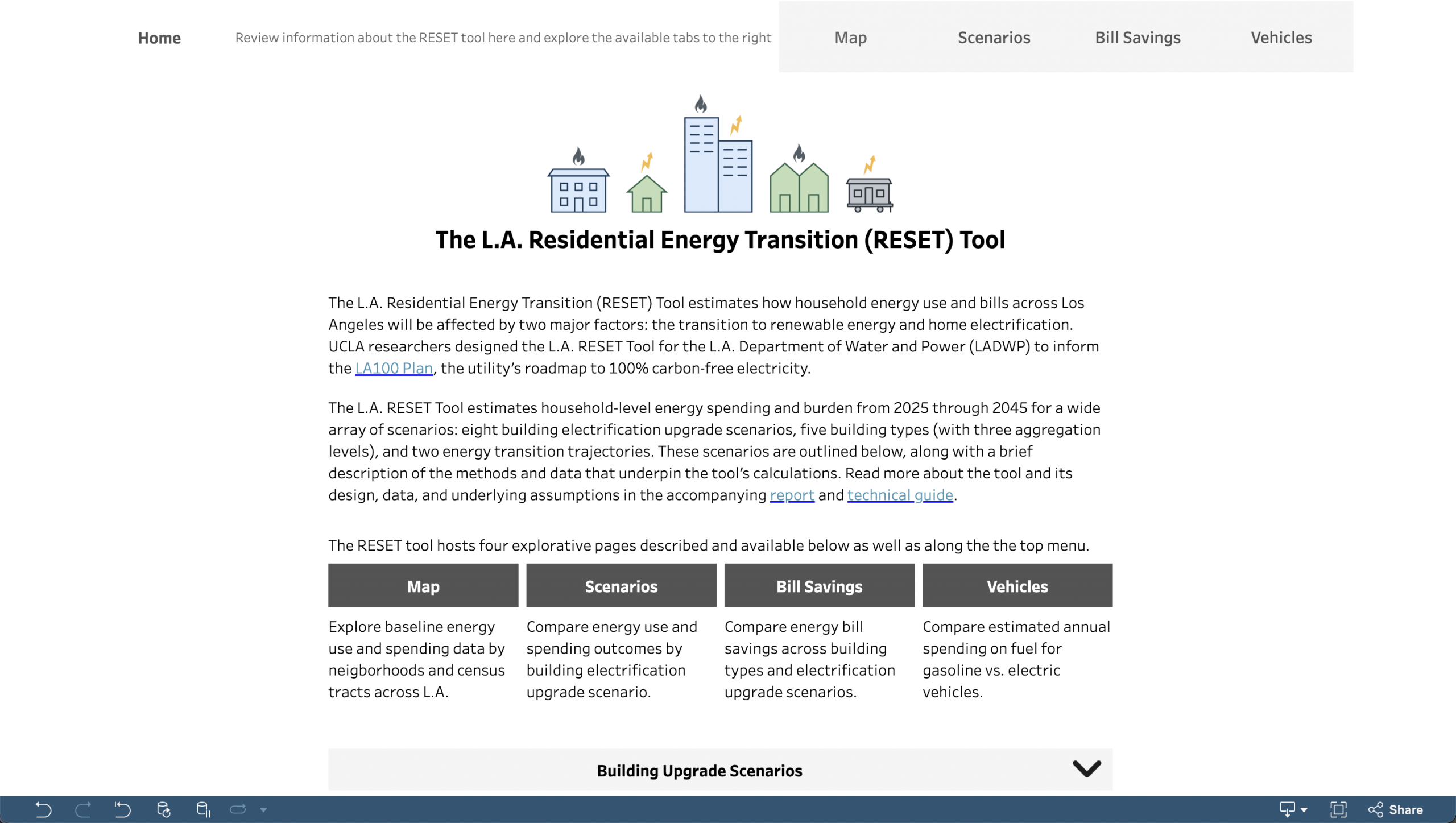
The Los Angeles Residential Energy Transition Tool (RESET) estimates how LA households’ energy use and bills will be affected by home electrification and the renewable energy transition.

See the RESET Tool Technical Guide, which documents the logic, data sources, capabilities, scenarios, and variables of the RESET Tool.

See the Data Tool – “The Los Angeles Residential Energy Transition Tool“

This work builds on 10 years of successful research collaborations between UCLA and LADWP. As a public university and one of LADWP’s oldest customers, UCLA has a longstanding stake in the local community. UCLA draws on established relationships with civic leaders and community groups to connect university research with local priorities and inform the utility’s long-term planning. An agreement between LADWP and the UCLA Sustainable LA Grand Challenge makes the utility’s ongoing collaboration with UCLA possible.

UCLA partners who worked on LA100 Equity Strategies and other LADWP-related research include the California Center for Sustainable Communities, Center for Neighborhood Knowledge, Emmett Institute on Climate Change and the Environment, Fielding School of Public Health, Institute for Research on Labor and Employment, Institute of the Environment & Sustainability, International Institute, Latino Policy and Politics Institute, Luskin Center for Innovation and Samueli School of Engineering.

Funding Acknowledgements

LADWP supported multiple projects featured on this page. Individual publications acknowledge additional funders and research partners.

Explore our research on clean energy and local water supplies.

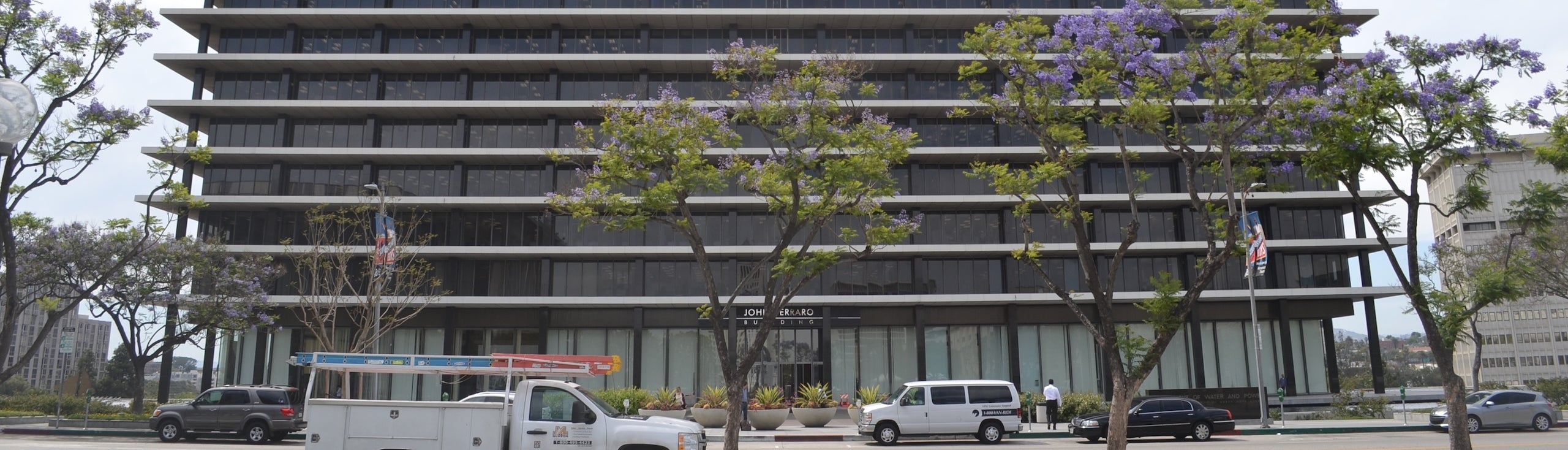
Top page photo:
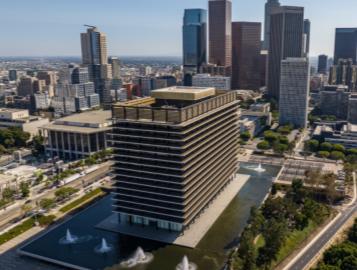
John Ferraro Building Los Angeles Department of Water and Power’s headquarters
Credit: Ana María León / flickr

More Energy & Water updates

Server room with rows of illuminated computer servers, overhead ventilation ducts and blue digital light effects. How data centers are uniting Americans from across the partisan divide

UCLA’s Megan Mullin on the economic and political calculations surrounding AI growth

UCLA-led workshop with more than 50 experts identifies communications, research, and policy prioritiesSelin Filiz, Sustainable LA Grand Challenge Restoring public confidence in drinking water after wildfires
UCLA-led workshop with more than 50 experts identifies communications, research, and policy priorities

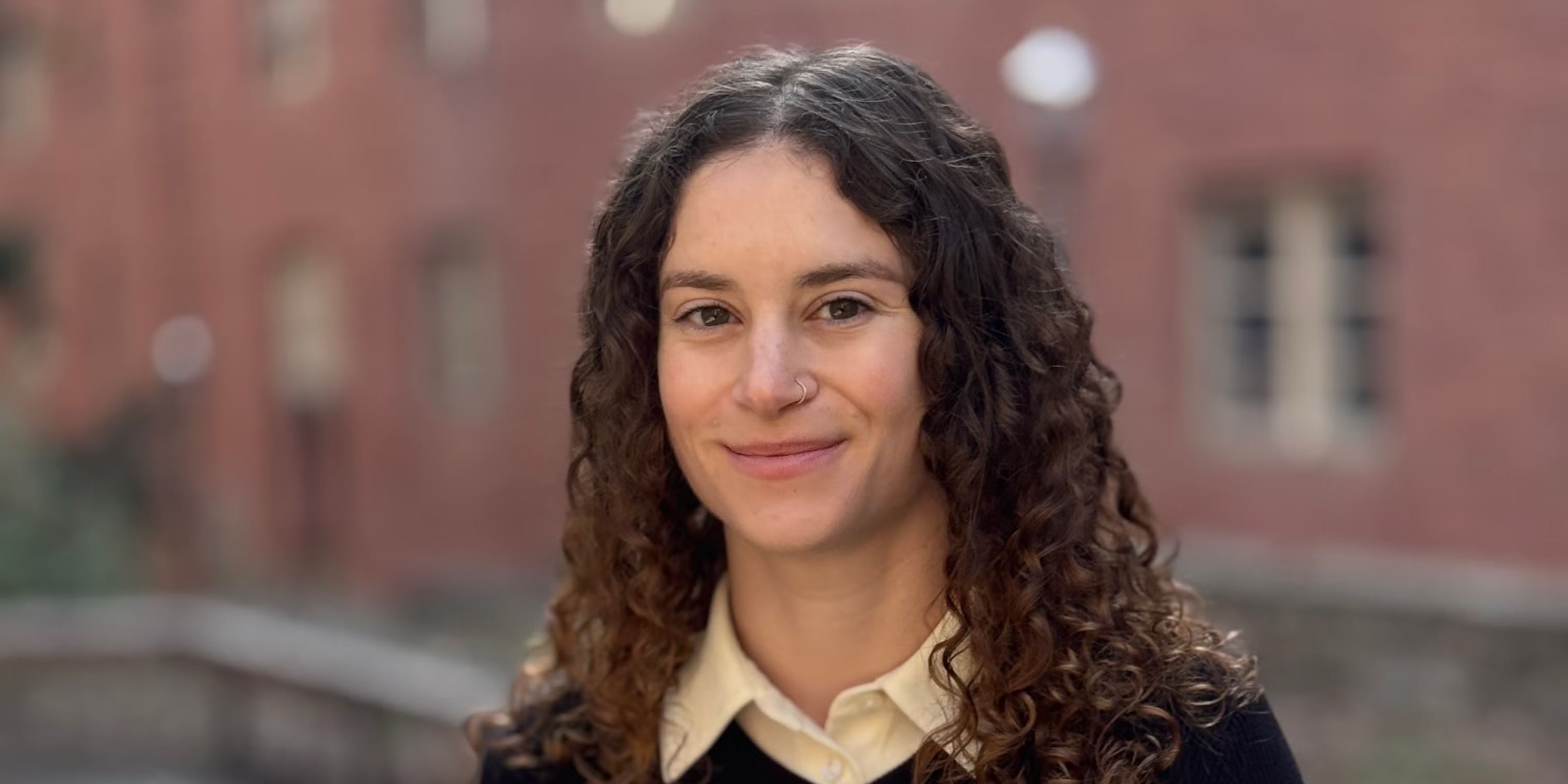
A 2 by 1 headshot of Rachel Sheinberg Introducing new postdoctoral researcher, Rachel Sheinberg

Learn more about our new team member and her research